

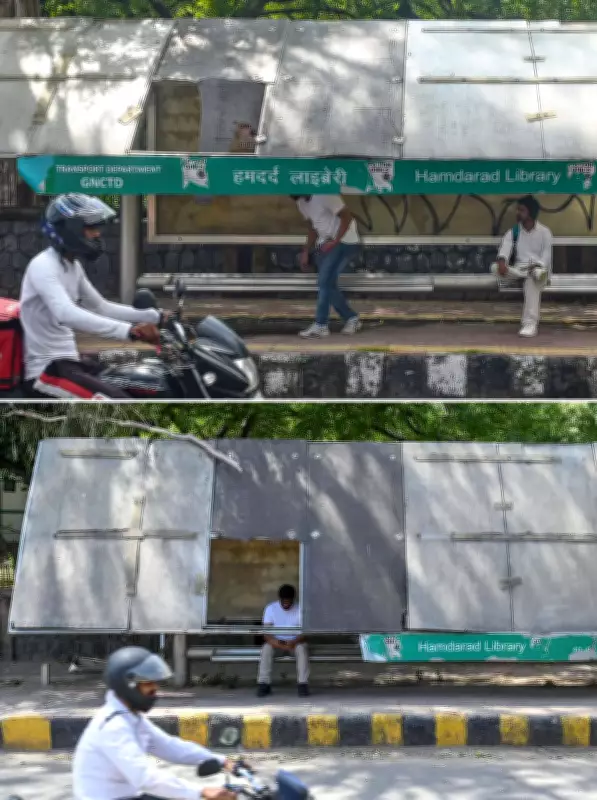
Delhi Bus Stop Audit Exposes Severe Infrastructure Deficiencies During Scorching Heat
New Delhi is grappling with an intense heatwave, and a recent citizen-led audit of bus stops has uncovered alarming gaps in basic amenities. The survey found that approximately one in six bus stops in the capital lacks designated shelter, leaving commuters exposed to extreme temperatures.
Widespread Shelter Shortages and District Disparities
Out of Delhi's estimated 5,000 bus stops, volunteers audited 231 locations. While 83% of surveyed stops have some form of shelter, the distribution is highly uneven. Northeast Delhi fares worst with only 31% of stops having shelters, compared to central and New Delhi areas which boast 100% coverage.
This comprehensive audit, supported by the Public Transport Forum and Greenpeace India, has been ongoing since 2024. Volunteers use a structured survey instrument to evaluate 18 different facilities at each stop, including overhead roofs, seating arrangements, route maps, digital displays, lighting, CCTV surveillance, drinking water access, dustbins, toilets, and pedestrian crossings.

Critical Amenities Nearly Absent Across the City
The audit revealed that drinking water is available at fewer than 2% of bus stops, making even brief waits uncomfortable during extreme heat. "Several of these deficiencies are systemic rather than district-specific," the report states. "Essential facilities such as CCTV cameras (3% coverage), dustbins (7%) and drinking water (2%) are almost entirely absent across all districts. This points to a broader, citywide policy and implementation failure rather than isolated gaps in specific areas."
Information and Safety Infrastructure Lacking
Commuters face significant challenges with navigation and safety. Only about half of surveyed stops have route maps, limiting basic wayfinding for passengers. "More concerning is the near absence of real-time and safety features: just 3% of the stops are equipped with digital ETA boards and fewer than 4% have panic buttons," the audit notes. "This leaves most commuters without reliable information or emergency support, forcing them to travel without visibility or security assurances."
Contradictions with Official Guidelines and Heat Action Plans
These findings starkly contradict established benchmarks. The Delhi Heat Action Plan 2024-25 mandates that the transport department ensure availability of shades or shelters, drinking water, and ORS packets at bus stands. Similarly, the Indian Road Congress 2022 guidelines specify that bus stops should be well-lit and well-shaded, with passenger information systems providing both static and real-time data, along with recommendations for dustbins and drinking water facilities.
The India Meteorological Department has issued a yellow alert for heatwave conditions, underscoring the urgency of addressing these infrastructure gaps.
Voices from the Ground: Commuters and Activists Speak Out
"Heat in Delhi is not just an environmental issue anymore, it is a mobility crisis," said Aakiz Farooq, campaigner at Greenpeace India. "For lakhs of daily commuters, especially those who rely on buses, the journey begins with standing under the open sun, often without shade, water or basic protection. Well-designed bus shelters can act as critical cooling points, offering shade, ventilation and even simple interventions like reflective roofs and drinking water access."
Shipra Rani, an artist who participated in the audit, shared her personal experience: "The bus stops at the Badarpur terminal and Mehrauli had no proper shelter. They also lacked proper seating arrangement, making it difficult for people to wait in sweltering heat."
Nishant, coordinator of Public Transport Forum, emphasized the broader implications: "One of the most basic things that structures a frustrating, unsafe experience for bus users, particularly women, children and persons with disabilities, was the absence of a shelter or shade. The condition is far worse in urban villages and peri-urban areas that have faced systematic neglect for decades."

The transport department did not respond to requests for comment on these findings, leaving questions about future improvements unanswered as Delhi continues to face extreme weather conditions.





