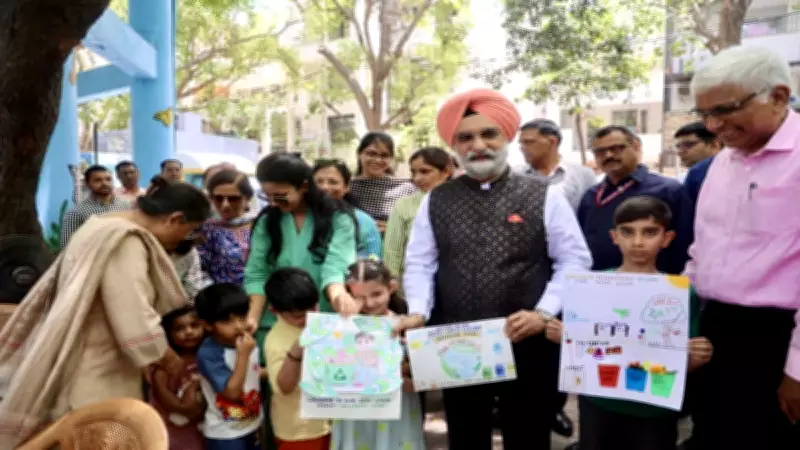
Delhi Lieutenant Governor TS Sandhu on June 23 visited a zero-waste colony in the capital and directed the Municipal Corporation of Delhi (MCD) to replicate the successful waste management model across all 272 wards. The visit underscores the administration's push for sustainable urban waste practices.
Model Colony: Zero Waste in Action
The colony, located in the Dwarka area, has achieved near-zero waste generation through segregation at source, composting, and recycling. Residents separate wet and dry waste, with wet waste processed in community composters and dry waste sent to recycling centers. The initiative has reduced landfill-bound waste by over 90%, according to MCD officials accompanying the LG.
Sandhu inspected the colony's waste processing units, including a biogas plant that converts organic waste into cooking gas for the community kitchen. He praised the residents' participation and stressed the need for scaling up such models to tackle Delhi's mounting waste crisis.

MCD Directed to Expand Model
During the visit, Sandhu instructed the MCD commissioner to prepare a roadmap for implementing the zero-waste model in all wards within six months. He emphasized that the model must be adapted to local conditions, with focus on high-density areas and slums. The LG also called for public awareness campaigns to encourage citizen participation.
“The success of this colony shows that zero waste is achievable with community effort and proper infrastructure. We must replicate this across Delhi to reduce pressure on landfills and improve public health,” said Sandhu, according to an official statement.
Impact and Challenges
Delhi generates over 11,000 tonnes of waste daily, with only about 60% processed. The three main landfills—Ghazipur, Bhalswa, and Okhla—are overflowing, causing pollution and health hazards. The zero-waste model, if scaled, could significantly cut landfill waste and greenhouse gas emissions.
However, challenges include funding, land availability for processing units, and behavioral change among residents. MCD officials said they would seek public-private partnerships and central government support to finance the expansion.
Broader Context
The visit comes ahead of the monsoon season, when waste management becomes critical to prevent waterlogging and disease. The LG has previously flagged waste management as a top priority for the MCD, which has faced criticism for inefficiency. The zero-waste colony initiative was launched in 2023 as a pilot project and has since been recognized by the Ministry of Housing and Urban Affairs.
Residents of the colony expressed pride in their achievement. “We have reduced our waste to almost nothing. It required discipline, but now it’s a habit,” said Ramesh Kumar, a resident. The MCD plans to identify 10 more colonies for immediate implementation, with a target of 50 colonies by year-end.