

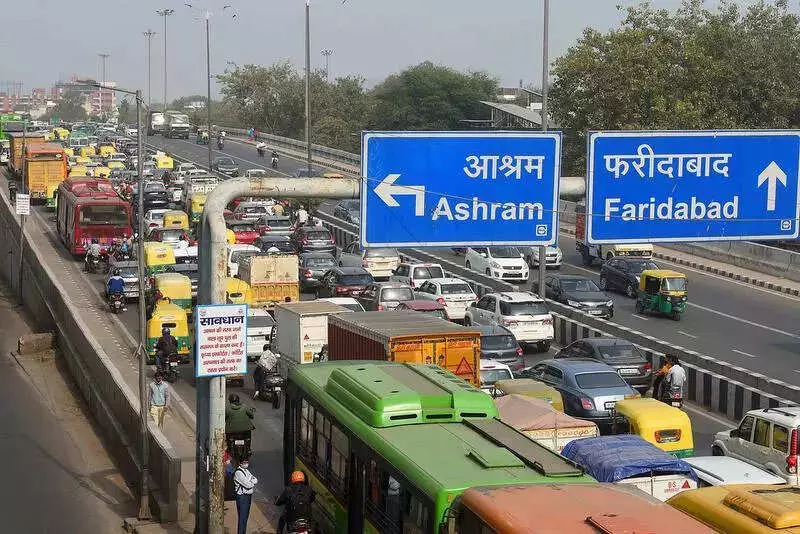
New Delhi: After months of waiting, the Public Works Department has finally unveiled detailed plans for a massive infrastructure project. The department will spend Rs 325 crore to expand and upgrade flyovers at two critical intersections on Delhi's Outer Ring Road. These are the heavily congested Modi Mill and Savitri Cinema junctions.
Project Aims to Ease Chronic Traffic Woes
Scheduled for completion within two years, this initiative has clear goals. It aims to reduce chronic congestion, enhance road safety, and save commuters valuable time and fuel. The focus is on one of south Delhi's busiest corridors.
The stretch from Modi Mill to IIT Gate handles an enormous volume of vehicles daily. This often leads to severe gridlocks, especially near key junctions. These include Maa Anandmayee Marg, Captain Gaur Marg, and the Savitri Cinema intersection.

A recent feasibility study by the PWD highlighted the urgent need for action. The study recommended capacity-augmentation measures to ensure smoother traffic flow and safer commuting for all.
Detailed Plans for Modi Mill Flyover Extension
The Modi Mill flyover is getting a significant extension. It will now stretch all the way to Kalkaji Temple. This new section will cover approximately 1.5 kilometers.
The structure will feature six lanes in total. Each side will have a nine-metre wide carriageway. Design elements include a median and crash barriers topped with safety railings.
This extended flyover will cover several critical intersections. These are Captain Gaur Marg, Maa Anand Mai Marg, Lotus Temple Road, Masjid Moth Road, and the Nehru Place bus depot area.
New Grade Separator at Savitri Cinema Junction
The Savitri Cinema junction is a notorious bottleneck. It causes daily headaches for residents of Greater Kailash, Chittaranjan Park, and GK-II. To address this, the PWD will build a one-way, three-lane grade separator here.
This new structure will stretch roughly 900 metres. It includes a 435-metre elevated section. The design ensures seamless integration with the existing one-way flyover.
Integration will happen through two ramps. One ramp will climb up to the elevated section, and another will descend. The project also includes dedicated bus bays and redesigned junctions.
These changes aim to improve pedestrian safety and streamline traffic flow. Key crossings set for improvement are Savitri Cinema/GK-II Road, Masjid Moth Road, and C R Park Road.
Breakdown of Project Costs and Additional Work
The Modi Mill flyover extension carries an estimated cost of Rs 221 crore. The new Savitri Cinema grade separator is budgeted at Rs 26 crore. The remaining funds will finance other crucial upgrades.
This includes revamping existing roads, footpaths, and drainage systems across the project area. Some existing carriageways, retaining walls, and viaduct sections may be removed or completely rebuilt.
Footpaths, cycle tracks, and bus shelters will be relocated or reconstructed. Streetlights, pole signages, and various safety devices will be shifted to new, optimal locations.
Drainage systems will receive significant upgrades. This work aims to prevent waterlogging during monsoon seasons.
Comprehensive On-Ground Improvements
The area beneath the new flyovers will see substantial changes. Roads will be widened, and new U-turn facilities will be created. Footpaths will be upgraded, and lighting will be enhanced for better visibility.
Clear signage will be installed to guide drivers effectively. Pedestrian crossings and safety islands will be revamped. Auxiliary turning lanes and bus bays will be improved to facilitate smoother traffic movement.
By combining modern flyover design with careful traffic management, the PWD has a broader vision. The department aims to integrate this new infrastructure seamlessly with what already exists.
The ultimate goal is to transform the commuting experience in these crucial south Delhi stretches. This project also sets the stage for a more efficient and future-ready Outer Ring Road for India's capital city.






