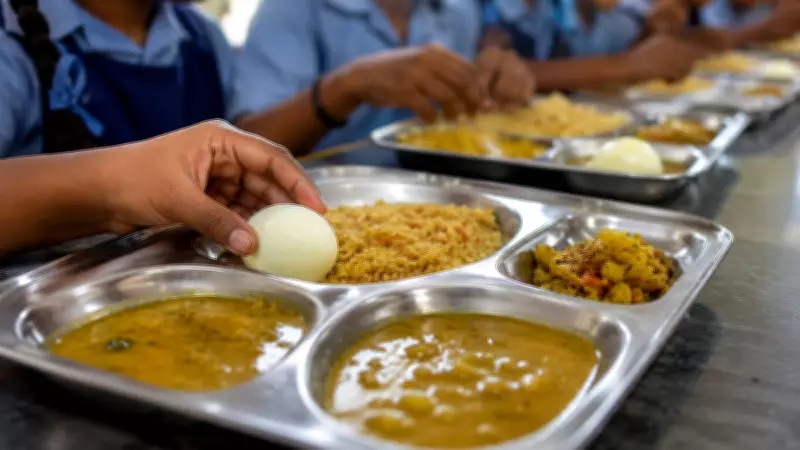
The debate over including eggs in India's mid-day meal scheme has once again brought to the forefront a fundamental question: should public nutrition policy be guided by scientific evidence or by institutional and cultural beliefs? While arguments for and against vegetarianism and non-vegetarianism dominate public discourse, the core issue of addressing malnutrition among schoolchildren often gets sidelined.
Scientific Consensus on Nutritional Benefits
According to the National Institute of Nutrition, eggs are a powerhouse of essential nutrients, including high-quality protein, vitamin B12, iron, and choline. For children from economically disadvantaged backgrounds, where protein deficiency is rampant, eggs can significantly improve growth, cognitive development, and overall health. Studies have shown that providing eggs in school meals can reduce stunting and wasting by up to 15%.
The Vegetarian vs Non-Vegetarian Debate
Opposition to eggs in mid-day meals often stems from religious and cultural sentiments, particularly in states with strong vegetarian traditions. Some argue that eggs are non-vegetarian and thus violate the dietary preferences of certain communities. However, nutritionists point out that eggs are classified as lacto-ovo vegetarian in many contexts and are a crucial source of nutrients for children who may not have access to other protein-rich foods.

In states like Tamil Nadu and Andhra Pradesh, eggs have been successfully incorporated into school meals for years, leading to improved attendance and academic performance. In contrast, states like Rajasthan and Madhya Pradesh have resisted, citing cultural reasons. This inconsistency highlights the tension between science and belief.
Impact on Malnutrition and Education
India is home to nearly 40% of the world's stunted children, and malnutrition remains a critical barrier to educational outcomes. The mid-day meal scheme, one of the largest school feeding programs globally, reaches over 100 million children. Adding eggs to these meals could be a cost-effective intervention to combat malnutrition. The cost of providing an egg per child per day is estimated at around ₹5, a small investment with potentially high returns in terms of health and learning.
Policy Recommendations and Way Forward
Experts suggest that the government should rely on scientific evidence rather than political or religious considerations when designing nutrition programs. Some recommend offering eggs as an optional component, allowing children to choose based on their dietary preferences. Others advocate for a uniform policy that prioritizes the nutritional needs of children above all else.
As the debate continues, the question remains: will India's public nutrition policy be driven by data and science, or will it continue to be shaped by institutional beliefs? The answer will have far-reaching implications for the health and future of millions of children.