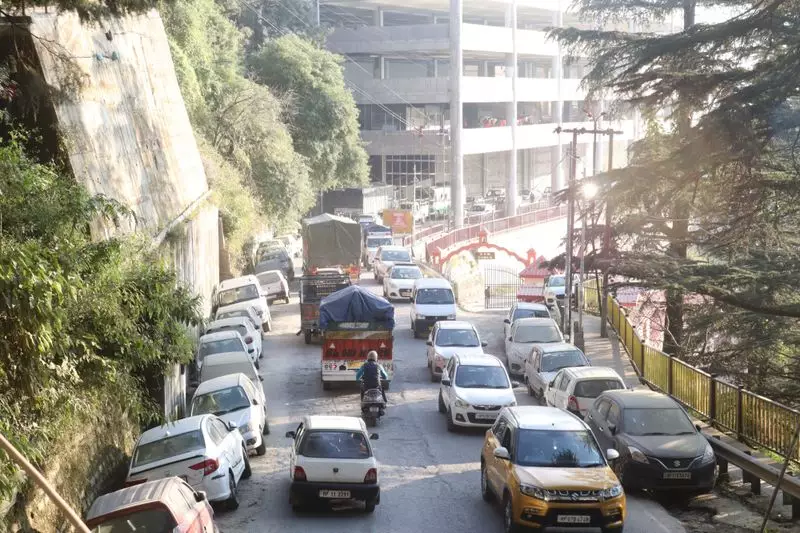
The Himachal Pradesh High Court has taken a stern stance on the worsening traffic gridlock in the state capital, demanding a fresh and comprehensive action plan from the top administration. A division bench, comprising Justice Tarlok Singh Chauhan and Justice Sushil Kukreja, directed the state's Chief Secretary to file a new affidavit outlining concrete steps to tackle the chronic congestion plaguing Shimla.
Court Dissatisfied with Previous Reports
The bench expressed clear dissatisfaction with the contents of an earlier affidavit submitted by the Chief Secretary. The judges observed that the previous report lacked substantial and actionable measures to resolve the traffic chaos. The court emphasized that the new affidavit must move beyond generalities and present a detailed, time-bound strategy for immediate and long-term relief.
This judicial intervention came during the hearing of a public interest litigation (PIL) that highlighted the severe traffic problems in the city. The petitioner's counsel argued that the situation had reached a critical point, causing daily hardship for residents and visitors alike. The court acknowledged these concerns, noting that the congestion was negatively impacting the city's livability and its reputation as a premier tourist destination.

Key Issues and Demanded Solutions
The High Court pinpointed several specific areas where the administration's plan was found wanting. The bench instructed the Chief Secretary's new affidavit to explicitly address the following critical points:
- Decongestion of the Ridge and Mall Road: The heart of Shimla, including the iconic Ridge and Mall Road areas, is frequently paralyzed by traffic. The court wants a clear plan for managing vehicle flow in these zones.
- Regulation of Commercial and Tourist Vehicles: A major contributor to the jam is the unchecked movement of taxis, tourist buses, and goods carriers. The affidavit must detail regulations for these vehicles.
- Parking Management Plan: Haphazard parking on narrow roads significantly reduces carriageway width. The administration is to propose a systematic parking policy.
- Implementation of a One-Way Traffic System: The court has asked for a re-evaluation and effective implementation of one-way routes to streamline movement.
- Strict Enforcement of Traffic Rules: The bench stressed the need for consistent enforcement against violations like illegal parking and wrong-side driving.
The court has set a firm deadline for this crucial document. The Chief Secretary must file the fresh, detailed affidavit by July 31, 2024. This directive underscores the urgency with which the judiciary views the escalating traffic crisis.
Broader Implications and Next Steps
This order places the onus squarely on the highest levels of the Himachal Pradesh bureaucracy to devise a workable solution. The traffic congestion in Shimla is not merely an inconvenience; it has broader implications for public safety, emergency service access, tourism revenue, and environmental pollution due to idling vehicles.
The court's move signals a shift from mere discussion to demanding accountable, executable plans. It reflects a growing impatience with administrative delays in solving a problem that visibly worsens with each passing tourist season. The upcoming affidavit will be scrutinized for its practicality and potential for on-ground impact.
The next hearing on the matter is scheduled for early August, shortly after the submission deadline. All stakeholders, including the municipal corporation, traffic police, and tourism department, will need to coordinate closely to prepare a response that satisfies the High Court's mandate for a clear and decisive traffic management plan for Shimla.