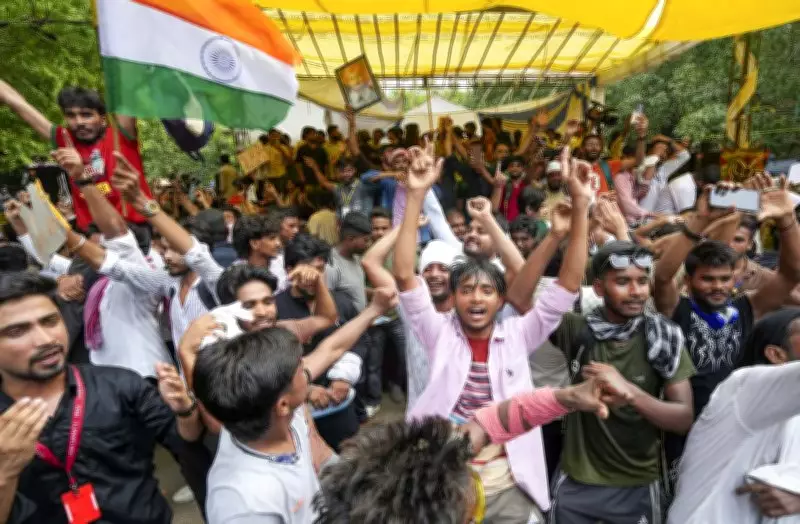
The resignation of Union Education Minister Dharmendra Pradhan, prompted by sustained protests from the Cockroach Janta Party (CJP) at Jantar Mantar, has drawn national attention to the deep-rooted crises in India's education sector. While the CJP achieved its immediate goal, the larger challenge remains: a systemic overhaul of an education system that has become subservient to political and commercial interests.
Systemic Distortions and Underfunding
India's education outlay has declined from 4.6% of the Union Budget in 2013-14 to a mere 2.5% in 2024-25. This gap has been filled by private entities, often driven by profit rather than pedagogy. Over the past decade, approximately 94,000 government schools were shut down, while the number of private schools surged to 3.4 lakh, compared to over 10 lakh government-run schools. In higher education, only 17% of colleges are government-run; the rest are private, many with substandard facilities. Private universities now number over 500 and have expanded at nearly three times the rate of government universities.
Quality Crisis and Coaching Industry Boom
The quality of education in government schools remains low, pushing parents to spend on tuition. India's coaching industry is now worth Rs 60,000 crore. The NEET paper leak and over 20 student suicides were the catalysts for the Jantar Mantar protests, but the underlying causes include a corruption-ridden system where revenue generation and ideological loyalty trump learning.

Political Interference and Ideological Shift
The appointment of heads of educational institutions is increasingly determined by political ideology and RSS endorsement rather than merit. This has long-term implications, as senior faculty serve until age 65. While islands of academic excellence remain, the overall trend prioritizes a Hindu majoritarian orientation and a selectively glorified ancient past.
Employment Crisis for GenZ
The education-employment link is critical for India's GenZ. Of the 80 lakh annual graduates, most face bleak job prospects. Government jobs are the most sought-after, with 2 crore applicants for about 1 lakh positions each year. For the UPSC exam, around 13 lakh aspirants compete for roughly 1,000 posts, a success rate of just 0.08%. Critics argue that the system functions like a lottery with fixed results.
Past Reforms as a Model
India's major sectoral reforms succeeded when politics stepped back and domain experts led. The Green Revolution (late 1960s) was driven by C. Subramaniam, with professionals like MS Swaminathan and BP Pal. The White Revolution was steered by Dr. Verghese Kurien. The 1991 economic reforms under PM Narasimha Rao were led by Dr. Manmohan Singh and Montek Singh Ahluwalia. In each case, competence was prioritized over political loyalty.
Way Forward: A National Education Reform Commission
India needs a National Education Reform Commission comprising credible educationists, academics, and experts, with a 12-month mandate to review the entire educational infrastructure. Its recommendations should be debated in Parliament and civil society to lay the foundation for a revised national education framework. The current focus on ideology over academics, as seen in textbook distortions, must be reversed.
Pradhan's resignation is only the tip of the iceberg. The task of conducting examinations should be removed from the National Testing Agency and returned to universities. The CJP-led protests have lifted the veil of fear, and the onus is now on the State and civil society to restore hope for a restless young generation demanding merit, honesty, and opportunity.