Jharkhand Unveils Sustainable Development Blueprint at National Forum
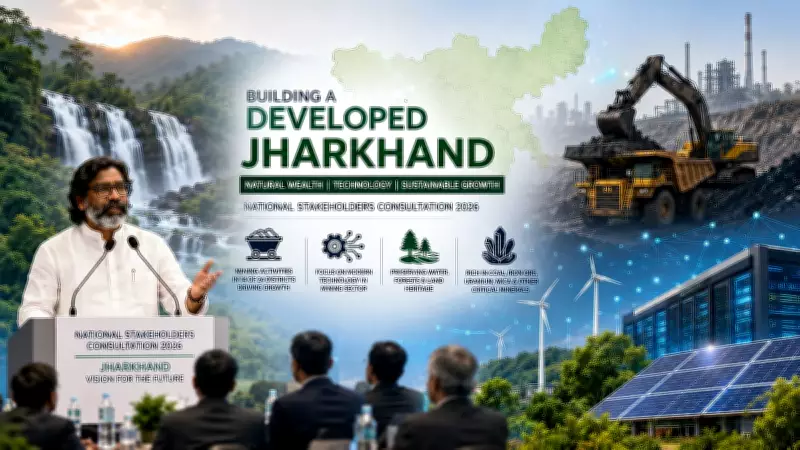
Jharkhand presented its comprehensive vision for sustainable growth at the National Stakeholders Consultation 2026, held in New Delhi on March 15. The state government highlighted key initiatives in renewable energy, tribal welfare, and industrial innovation, aiming to balance economic progress with environmental conservation.
Chief Minister Hemant Soren, addressing the consultation, emphasized Jharkhand's commitment to becoming a leader in green energy. The state plans to increase its renewable energy capacity to 5,000 MW by 2030, up from the current 1,200 MW, according to official data. This includes investments in solar and wind power projects across the state.
Focus on Tribal Empowerment and Inclusive Growth
A significant portion of the presentation focused on tribal welfare, with the government outlining schemes to improve education, healthcare, and livelihood opportunities for indigenous communities. The state has allocated ₹2,500 crore for tribal development in the 2026-27 budget, a 15% increase from the previous year. Officials noted that over 26% of Jharkhand's population belongs to Scheduled Tribes, making inclusive growth a priority.

"Our vision is to ensure that every tribal family benefits from the state's progress. We are implementing targeted programs to bridge the development gap," said Soren during his speech.
Industrial Growth with Environmental Safeguards
Jharkhand also showcased its industrial strategy, which promotes sustainable mining and manufacturing. The state has introduced a new policy requiring all mining projects to adopt zero-liquid discharge and afforestation measures. Additionally, the government is promoting eco-tourism and handicrafts to create jobs without harming natural resources.
The consultation, organized by the NITI Aayog, brought together policymakers, industry leaders, and civil society representatives. Jharkhand's presentation received positive feedback, with experts praising its balanced approach. "Jharkhand's model demonstrates how resource-rich states can pursue growth without compromising environmental integrity," noted a NITI Aayog official.
Key Statistics and Future Targets
Jharkhand's GDP growth rate for 2025-26 is projected at 8.2%, above the national average. The state aims to reduce its carbon footprint by 30% by 2030, supported by a ₹10,000 crore green fund. Investments in renewable energy and sustainable agriculture are expected to create 50,000 new jobs over the next five years.
The state government also plans to establish a Centre of Excellence for Sustainable Mining in Ranchi, in collaboration with the Indian School of Mines. This initiative will focus on research and training for environmentally friendly extraction techniques.
As the consultation concluded, Jharkhand's vision was seen as a template for other states seeking to align development with sustainability goals. The state's proactive stance on climate action and social equity positions it as a key player in India's green transition.