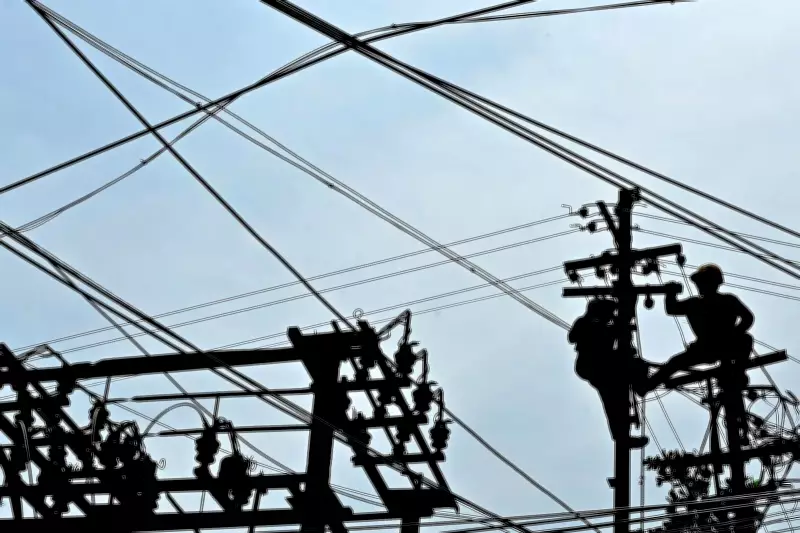
Thiruvananthapuram: The Kerala State Electricity Regulatory Commission (KSERC) has directed the Kerala State Electricity Board (KSEB) to submit comprehensive plans for capacity addition to meet the state's growing power demand. The commission warned KSEB that it will not grant blanket approval for short-term power purchases from exchanges at excessive rates unless a detailed plan is provided to meet peak hour demand with cheaper power sources.
KSERC's directive on power procurement
KSERC urged KSEB to explore pumped storage hydro projects and battery energy storage systems (BESS) to store inexpensive power available during daytime. During 2024-25, KSEB purchased approximately 4,911 million units (MU) from the short-term market and power exchanges, constituting about 19% of its total power purchase. The total cost of this procurement was Rs 3,116 crore, accounting for 26% of the total power purchase cost.
Out of the total power purchase, about 1,104 MU (4.32% of total) was bought from the term ahead market (TAM) at a total cost of Rs 1,010.27 crore (9% of total cost), at an average rate of Rs 9.15 per unit. This purchase was intended to meet the state's peak demand.

Continued dependence on exchanges
For 2025-26 and the current year, KSEB has continued its heavy reliance on exchanges, including TAM, without exploring alternatives such as enhancing its own generation capacity. KSERC noted that Kerala possesses significant water potential for developing hydro projects, including pumped storage hydro projects, to meet summer peak demand. A well-designed pumped storage project is a viable alternative for peak demand, though it typically requires a long gestation period.
Central government's push for pumped storage
The central government is prioritizing pumped storage projects. Currently, about 12 pumped storage projects with a total capacity of 16,120 MW are under construction in India. According to the capacity addition plan up to 2031-32, an additional 54,610 MW is planned. However, it is ironic that despite KSEB identifying several pumped storage schemes over the past decade, none of the state's projects are listed in the Central Electricity Authority's (CEA) capacity addition plan for pumped storage projects until 2031-32.
Status of KSEB's proposed projects
KSERC noted that KSEB proposed the 800 MW Idukki (Golden Jubilee) extension scheme in its capital investment plan for the MYT period from 2022-23 to 2026-27, but no progress has been reported. Additionally, KSEB proposed two battery energy storage systems (125 MW - 500 MWh each) through SECI at Mylatti-Kasaragod, but their availability cannot be ensured by summer 2026.
Commission's final directive
Considering these factors, KSERC directed KSEB to submit viable alternative proposals for generation capacity addition, including appropriate pumped storage schemes and BESS systems, to meet the state's peak demand.