

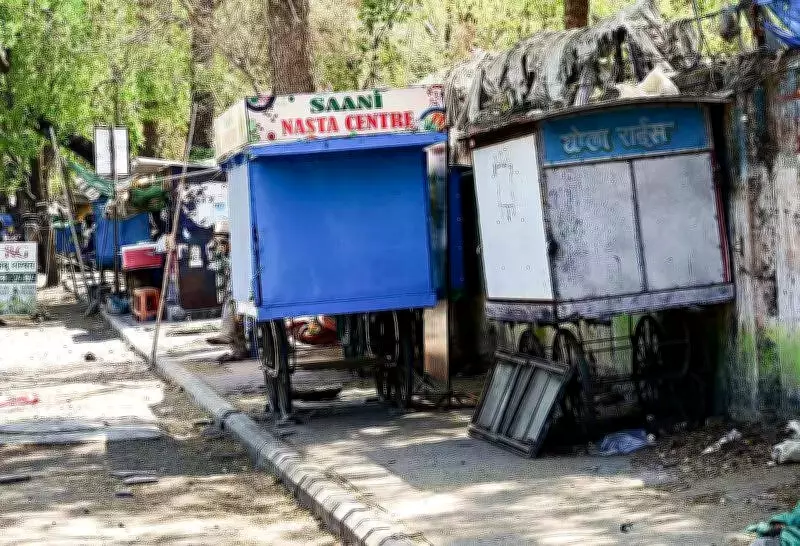
Nagpur's Pedestrian Peril: Footpath Encroachments Defy Gadkari's Directives
Union Minister for Road Transport and Highways Nitin Gadkari has repeatedly emphasized the urgent need to protect pedestrians in Nagpur, yet the city continues to grapple with severe footpath encroachments that endanger lives. During a road safety event last year, Gadkari highlighted a personal incident where an acquaintance was struck by an auto-rickshaw while walking on the road due to the absence of a usable footpath. He lamented that cycles and two-wheelers now openly ride on footpaths, which are meant for pedestrians but are increasingly being taken over by various obstructions.
Authorities Urged to Act, But Ground Reality Remains Grim
Gadkari called upon civic officials and police to safeguard the rights of common people by ensuring safe and encroachment-free footpaths. "We understand people need to run businesses, but you cannot risk others' lives. Lack of proper footpaths will only lead to more accidents," he asserted. However, despite these strong remarks, the situation on the ground has shown little to no improvement. In numerous parts of Nagpur, footpaths designated for pedestrians remain either encroached upon or poorly maintained, forcing residents to walk on busy roads and exposing them to significant accident risks.
Citizens report that despite repeated directives from Gadkari, the issue persists across many localities, with the Nagpur Municipal Corporation (NMC) and city police facing consistent criticism for their failure to address the problem effectively. Gadkari himself has pulled up civic officials on multiple occasions regarding the condition of footpaths and ongoing encroachments, yet residents claim that visible, consistent action against violators is rare.

Daily Struggles for Pedestrians in Key Areas
For many pedestrians in Nagpur, navigating the city has become a daily struggle. In busy areas such as Mahal, Sitabuldi, Wardha Road, Khamla, IT Park Road, and Dharampeth, footpaths are often occupied by parked vehicles, street vendors, temporary stalls, or construction materials. This leaves pedestrians—including elderly citizens, children, and persons with disabilities—with little choice but to walk along crowded roads, heightening their vulnerability to traffic incidents.
Vaibhav Deshpande, a regular commuter in Mahal, pointed out that the city's infrastructure planning frequently overlooks pedestrians. "Crores are spent on widening roads every year, but pedestrians are left with no place to walk. Even when money is spent on building footpaths, these are quickly taken over by parking, vendors, and other encroachments," he explained. Deshpande advocated for stricter penalties, suggesting that repeated encroachments should attract heavy fines ranging from ₹15,000 to ₹20,000 to deter offenders from blocking pedestrian pathways.
Enforcement Gap: The Core Challenge
Another resident, Saksham Bante, identified enforcement as the biggest challenge. "The problem is not the absence of plans but the absence of enforcement. Footpaths are constructed but remain unusable because encroachers are rarely penalised," he claimed. Bante emphasized that unless authorities begin taking consistent and strict action against those occupying footpaths, pedestrians will continue to be pushed onto the roads, putting their safety at serious risk.
With traffic volumes steadily rising in Nagpur, citizens stress that ensuring safe, accessible, and encroachment-free footpaths is crucial for improving overall road safety and making the city more pedestrian-friendly. The ongoing crisis underscores a pressing need for coordinated efforts between civic bodies, police, and the community to implement Gadkari's vision and protect the well-being of all residents.






