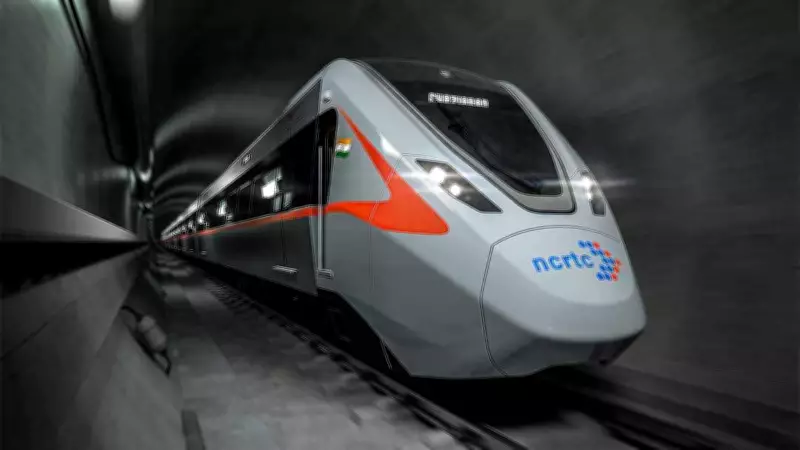
The Sarai Kale Khan-Meerut Namo Bharat Regional Rapid Transit System (RRTS) corridor is poised to become a major transportation artery in the National Capital Region, with projections indicating it will serve approximately 1.67 lakh daily commuters once fully operational. This ambitious infrastructure project represents a significant leap forward in regional connectivity, aiming to transform travel patterns between Delhi and Meerut.
Current Operational Status and Project Progress
At present, a substantial 55-kilometer section of the total 82.15-kilometer corridor is already in service, running from New Ashok Nagar to Meerut South. This operational segment provides a glimpse into the corridor's potential, offering faster and more efficient travel options for residents along this route.
Tokhan Sahu, Minister of State in the Ministry of Housing and Urban Affairs, recently provided crucial updates in a written reply to the Lok Sabha. He confirmed the ridership projection and detailed the project's advancement, noting that both physical and financial progress have surpassed the 90% mark as of December 31, 2025.

Detailed Progress Metrics
The minister elaborated on specific progress figures, revealing that physical completion stands at an impressive 96.40%, while financial progress has reached 90.20%. These numbers demonstrate the project's steady advancement toward full implementation and highlight the government's commitment to completing this transformative infrastructure initiative.
Project Background and Government Sanction
The Delhi-Ghaziabad-Meerut Namo Bharat RRTS corridor received official sanction from the Government of India in March 2019. This approval marked a crucial milestone in the development of rapid transit infrastructure in the NCR, setting the stage for enhanced regional connectivity and economic integration.
Technological Advancements and Travel Benefits
Designed to accommodate train speeds of up to 180 kilometers per hour, the rapid rail corridor promises to dramatically reduce travel time between Delhi and Meerut. Commuters can expect journeys to be completed in under an hour, a substantial improvement over the current road travel time of 1.5 to 2 hours. This time savings will significantly enhance productivity and quality of life for daily travelers.
Economic and Integration Benefits
The Economic Survey 2025-26, presented by Union Finance Minister Nirmala Sitharaman, highlighted several innovative aspects of the RRTS project. The report emphasized how the Namo Bharat RRTS enables comprehensive NCR-wide integration through strategic interchanges at Sarai Kale Khan, where passengers can seamlessly transfer between metro rail, Indian Railways, buses, and paratransit services.
Cost-Saving Innovations
A particularly noteworthy innovation involves utilizing RRTS infrastructure for the Meerut Metro system, resulting in substantial capital cost savings estimated at approximately ₹6,300 crore. This integrated design approach not only enhances system viability but also improves last-mile access for commuters. The strategy demonstrates how shared infrastructure can maximize returns on urban transport investments while creating more efficient, interconnected transportation networks.
The Sarai Kale Khan-Meerut Namo Bharat RRTS corridor represents more than just a transportation project—it symbolizes a new era of regional connectivity and economic integration for the National Capital Region. With its advanced technology, strategic intermodal connections, and innovative cost-saving approaches, this corridor is set to redefine urban mobility while serving as a model for future rapid transit developments across India.