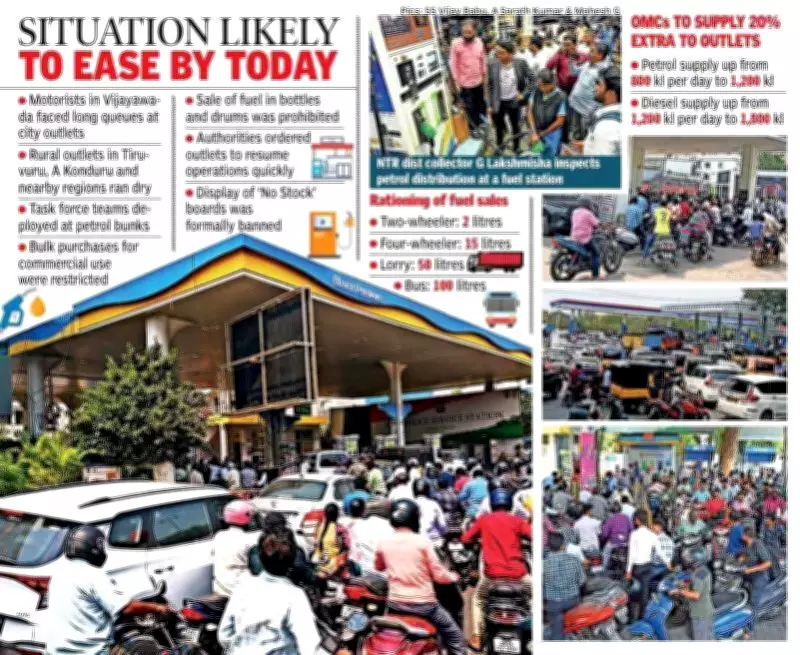
The Andhra Pradesh government on Monday deployed task force teams at petrol bunks in and around Vijayawada to prevent bulk purchases of oil for commercial purposes. The authorities also restricted the sale of diesel and petrol in loose quantities, such as in bottles and drums.
Fuel Shortage Hits Motorists
The move came as motorists continued to endure long waits at city outlets, while several rural stations, particularly in Tiruvuru, A Konduru, and nearby regions, ran dry, exhausting their stocks. Retailers put up 'No Stock' boards as concerns over availability persisted for the third consecutive day across Vijayawada and its rural belt.
According to official data, 35 petrol bunks across the district ran out of fuel on Sunday. Authorities instructed outlets to resume operations quickly and prohibited the display of 'No Stock' boards. Task force teams comprising revenue, police, and agriculture officials were stationed at outlets to ensure adequate supply to customers and to monitor refuelling practices closely.

Allegations of Bulk Sales to Commercial Users
Meanwhile, some consumers alleged that dealers were selling diesel in bulk to sand tractors and lorries. With industrial diesel prices rising sharply, commercial users thronged retail outlets to refuel, leading to depletion of stocks. This diversion of fuel for industrial purposes aggravated shortages faced by ordinary motorists.
'OMCs have agreed to supply 20% additional diesel and petrol stocks to retail outlets to ensure uninterrupted supply of fuel to customers at all 186 petrol bunks in the district,' NTR district joint collector S Ilakkiya said, adding, 'The current situation is a result of unnecessary bulk purchases by consumers driven by false propaganda.'
Demand Surge and Corrective Measures
Fuel demand surged 30% to 50% in recent days as motorists rushed to fill tanks, creating temporary shortages. Authorities clarified these were short-term imbalances caused by heightened demand rather than systemic supply issues. Officials urged consumers not to panic and assured that corrective measures, including enhanced monitoring and additional stock supply, were already in place to stabilize the situation across both city and rural outlets.