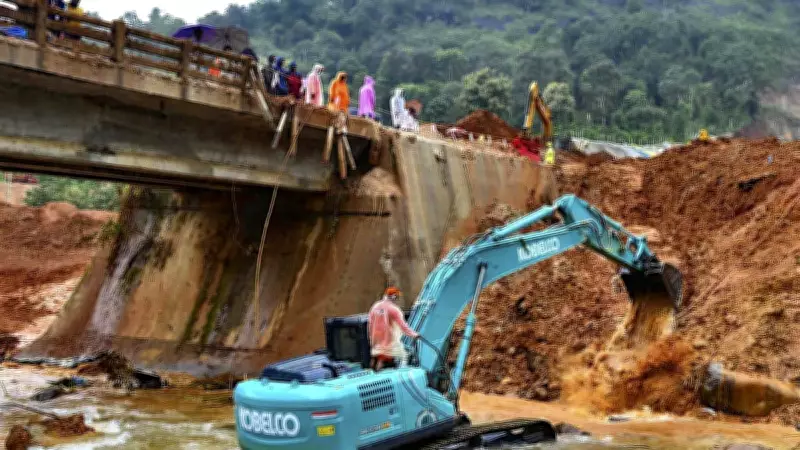
Wayanad Landslide: A Preventable Disaster
The catastrophic landslide that struck Wayanad in July 2026 was not a natural accident but the result of decades of unscientific infrastructure development and environmental neglect, argues infrastructure analyst Amal Chandra. Writing in an opinion piece, Chandra asserts that Kerala must reject the false dichotomy between development and conservation, and instead adopt a balanced approach that prioritizes rigorous geological assessments, adaptive engineering, scientific excavation, and strict environmental compliance.
Geological Assessments Ignored
Chandra points out that the landslide occurred in an area identified as ecologically sensitive by the Western Ghats Ecology Expert Panel (WGEEP), commonly known as the Gadgil Committee. Despite clear warnings, the state government permitted extensive construction, including roads, resorts, and residential complexes, without mandatory geo-technical surveys. "We are building on slopes without understanding the subsurface geology," he writes. "The result is predictable: slope failures, soil erosion, and loss of life."
Adaptive Engineering Needed
The article calls for adaptive engineering solutions tailored to Kerala's unique terrain. Chandra criticizes the "one-size-fits-all" approach to infrastructure, where standard designs are applied regardless of local conditions. He advocates for slope stabilization techniques, drainage management, and bio-engineering measures—such as planting deep-rooted vegetation—to reduce landslide risks. "Engineering must adapt to the land, not the other way around," he emphasizes.

Scientific Excavation and Quarrying
Unregulated quarrying and excavation are identified as key triggers for the Wayanad disaster. Chandra notes that hill slopes have been destabilized by unscientific mining for granite and laterite, often without environmental impact assessments. He urges the government to enforce the Kerala Minor Mineral Concession Rules, 2015, and ban quarrying in landslide-prone zones. "Every ton of rock removed without geotechnical oversight increases the risk of collapse," he warns.
Strict Environmental Compliance
Chandra highlights the failure of regulatory bodies to enforce existing environmental laws. The Kerala State Disaster Management Authority (KSDMA) had mapped landslide-prone areas, but these maps were not integrated into land-use planning. He calls for mandatory compliance with the Environmental Impact Assessment (EIA) notification, 2006, and the Coastal Regulation Zone (CRZ) norms, even in non-coastal hilly regions. "Environmental compliance is not an obstacle to development; it is a prerequisite for sustainable development," he asserts.
A Path Forward
The article concludes with a call for a multi-disciplinary task force comprising geologists, engineers, ecologists, and local communities to oversee infrastructure projects in the Western Ghats. Chandra suggests that Kerala can learn from countries like Japan and Switzerland, which have successfully integrated landslide risk management into urban planning. "The Wayanad tragedy must serve as a turning point," he writes. "We cannot afford to repeat the same mistakes."