

Prime Minister Modi Inaugurates Delhi-Dehradun Economic Corridor
On Tuesday, Prime Minister Narendra Modi officially inaugurated the much-anticipated Delhi-Dehradun Economic Corridor, a major infrastructure project set to transform connectivity between the national capital and the Uttarakhand state capital. This 213-kilometer, high-speed, access-controlled expressway is designed to drastically reduce travel time, slashing the journey from Delhi to Dehradun from over six hours to approximately 2.5 hours.
'Swabhiman' House Emerges as a Critical Roadblock
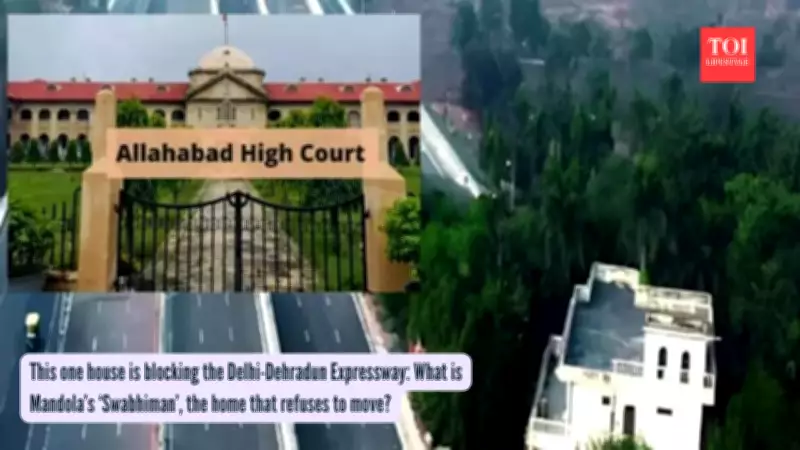
Despite the grand inauguration, the project faces a significant hurdle in the form of a small two-storey structure known as "Swabhiman" in Mandola village, Loni, Ghaziabad. This house stands directly in the path of the main exit ramp from Dehradun to Delhi, effectively blocking a crucial component of the expressway and causing delays in its full operationalization.
Located in Mandola village near Ghaziabad, the Swabhiman house occupies about 1,000 square meters, with an additional 600 square meters under dispute in the surrounding area. The National Highways Authority of India (NHAI) owns the remaining 1,600 square meters required for the ramp, but the house's presence prevents safe vehicle exit. This has forced NHAI to implement temporary workarounds that could lead to safety concerns and traffic congestion, particularly where the ramp connects to the Eastern Peripheral Expressway.

A Legal Battle Spanning Nearly Three Decades
The issue with the Swabhiman house is not a recent development; it traces back nearly 28 years to the Uttar Pradesh Housing Board's Mandola Housing Scheme initiated in 1998. At that time, the board acquired 2,614 acres from six villages, offering compensation to farmers, including Veersen Saroha, at a rate of around Rs 1,100 per square meter to build homes on plots. While most farmers accepted the deal, Veersen Saroha contested it in the Allahabad High Court, securing a stay order on his 1,600 square meter plot.
Over the years, the land was transferred to NHAI for the expressway project, but the legal stay persisted. Veersen Saroha has since passed away, but his grandson, Lakshyaveer Saroha, and niece, Pooja Nehra, continue to advocate for the family's rights.
Family Demands Fair Compensation at Current Market Rates
The family is pushing for compensation based on 2026 market rates rather than the outdated 1998 values. As quoted in reports, Pooja Nehra stated, "We are requesting the value of the claim to reflect the current market value, not based on the previous market value for the past nearly 20 years." In 2024, Lakshyaveer Saroha appealed to the Supreme Court, arguing that the housing board lacked the authority to transfer the land. The Supreme Court has referred the case to the Lucknow bench of the Allahabad High Court for further deliberation.
NHAI Implements Temporary Solution Amid Legal Delays
With the expressway now inaugurated, NHAI has constructed a narrow service road behind the Swabhiman house as a temporary fix. However, this alternative is expected to result in reduced capacity, increased dust, congestion, and delays compared to the planned full ramp. An NHAI official explained to TOI, "Work has been held up because of litigation, as the owner of the house and his family have filed a case in the Supreme Court." The Supreme Court has scheduled a hearing for April 16 to address the ongoing dispute.
The inauguration of the Delhi-Dehradun Economic Corridor marks a significant milestone in India's infrastructure development, promising enhanced connectivity and economic growth. Yet, the resolution of the Swabhiman house issue remains critical to ensuring the expressway operates at its full potential, highlighting the complex interplay between development projects and longstanding legal challenges.






