28 Community Organisations to Lead Afforestation in Dharamsala Forest Division
The Dharamsala Forest Division is scaling up its community-led afforestation campaign this year by enlisting 28 local organisations, comprising 17 Mahila Mandals, six Yuvak Mandals and five Self-Help Groups (SHGs), under the Rajiv Gandhi Forest Conservation Scheme. The initiative targets restoration of degraded forest land while generating rural employment and bolstering climate resilience across the Assembly constituencies of Dharamsala, Shahpur, Nagrota Bagwan and Kangra.
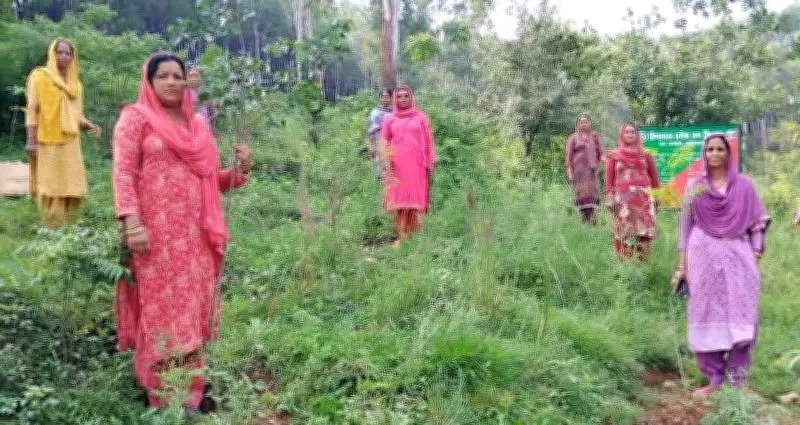
Local communities will take charge of planting, protecting and maintaining forests. The Forest Department expects nearly 3,000 women to participate in this year’s plantation drive, making it one of the region’s largest community-based afforestation programmes.
Financial Incentives and Long-Term Survival Focus
Divisional Forest Officer Amit Kumar said the scheme marks a departure from conventional plantation campaigns by making local communities responsible not only for planting saplings but also for ensuring their long-term survival. The department supplies quality saplings from its nurseries, while participating groups receive financial assistance of Rs 1.20 lakh per hectare for plantation and maintenance. A further incentive of the same amount is linked to the verified survival rate of the saplings.

Last year, the Dharamsala Forest Division planted nearly 22,000 saplings across about 28 hectares with active involvement of Mahila Mandals, SHGs and Yuvak Mandals. Encouraged by the results, the department has expanded the programme this year to cover more villages and community organisations.
Success Story from Ghurkari Village
One of the scheme’s success stories has emerged from Ghurkari village near Dharamsala, where the Om Namo Narayan Self-Help Group restored nearly two hectares of lantana-infested forest land. The women cleared invasive shrubs, fenced the area and planted more than 1,600 indigenous saplings, including native species. They also adopted traditional methods to protect the plantation from wild animals, resulting in an impressive survival rate.
Ecological Restoration and Livelihood Generation
According to the Forest Department, the scheme focuses as much on ecological restoration as it does on livelihood generation. In addition to increasing green cover, plantations of native species such as harad, behada and amla are expected to improve biodiversity, reduce soil erosion and enhance water conservation.
The Rajiv Gandhi Van Samvardhan Yojna is a key component of the state government’s target of increasing Himachal Pradesh’s forest cover from about 28% to 30% by 2030. By placing village organisations at the centre of forest management, officials believe the initiative is fostering a greater sense of ownership among local communities while creating employment opportunities close to home.