Electric Buses Emerge as Delhi's Dominant Public Transport Force
In a remarkable urban transformation, electric buses have quietly evolved from being an experimental novelty to becoming the fundamental backbone of Delhi's city transport system within just two years. Recent data reveals that these zero-emission vehicles now log approximately 88% of the total daily distance covered by their CNG counterparts, signaling a profound shift in the capital's mobility landscape.
From Humble Beginnings to Massive Ridership Growth
When electric buses first appeared on Delhi's roads in January 2022, the initial fleet of 300 vehicles served a mere 5% of Delhi Transport Corporation's 25 lakh daily passengers. Fast forward to 2024-25, and the scenario has dramatically changed: electric buses now transport nearly 10 lakh passengers daily, accounting for approximately 40% of DTC's average ridership of 25.6 lakh.
Fleet Transformation and CNG Phase-Out
The electric revolution has fundamentally reshaped Delhi's bus fleet composition. Over these two transformative years:

- Electric buses have multiplied from 300 to 1,725 vehicles, representing over 45% of DTC's total fleet
- CNG buses have declined by 34%, dropping from 3,637 to 2,094 vehicles
- Daily ridership on CNG buses has correspondingly fallen from nearly 24 lakh in 2022-23 to 15 lakh in 2024-25
This transition marks a significant milestone in Delhi's ongoing journey toward cleaner transportation, which began in 2001 when the Supreme Court mandated a shift from diesel to CNG buses to combat air pollution.
Operational Advantages and Daily Performance
All DTC electric buses feature air-conditioning and low-floor accessible designs, making them more comfortable and inclusive than many conventional buses. Notably, electric buses now outnumber CNG AC buses (909 vehicles) in Delhi's fleet.
On average, electric buses cover 2.9 lakh kilometers daily, compared to 3.3 lakh kilometers covered by all CNG buses combined. A DTC official has confirmed that the share of electric buses is expected to rise significantly by March-end, further accelerating this green transition.
The Quiet Revolution Begins
Delhi's electric bus journey commenced on January 17, 2022, when a single blue bus embarked on the 27-kilometer Pragati Maidan–IP Depot route. Early passengers were struck by the vehicle's astonishing quietness and quicker acceleration compared to the roaring, lumbering CNG buses, not to mention its cleaner operation.
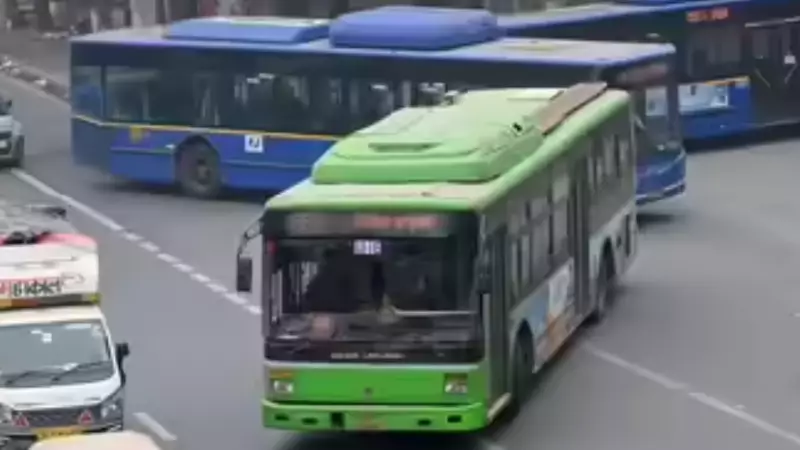
The color-coding system implemented by DTC provides clear identification: blue for electric buses, red for air-conditioned CNG buses, and green for non-AC CNG buses.
Policy Support and Economic Drivers
The Delhi government has aggressively scaled up electric bus deployment due to three key advantages: zero tailpipe emissions, low-floor accessible design, and lower operating costs compared to conventional buses.
A Delhi government official highlighted that central government initiatives have been instrumental in this expansion. Schemes like FAME II (Faster Adoption and Manufacturing of Electric Vehicles), which provides subsidies for EV transition, have played a crucial role in accelerating Delhi's electric bus adoption.
Broader Impact and Expert Perspectives
The electric bus revolution has positively impacted overall public transport usage in Delhi. Over these two years, DTC's total bus ridership has increased by 50,000 passengers daily, suggesting that improved service quality is attracting more commuters.
Amit Bhatt, India Managing Director at the International Council on Clean Transportation (ICCT), emphasized that this trend reflects sustained policy support and enhanced service quality. He noted: "National schemes such as FAME II and the current PM E-DRIVE initiative enabled large-scale deployment of electric buses. Given current trends, Delhi is well positioned to fully transition its bus fleet to electric and expand services further in the coming years."

This transformation positions Delhi at the forefront of India's urban mobility revolution, demonstrating how coordinated policy support, technological advancement, and public acceptance can rapidly transform a city's transportation ecosystem toward sustainability.