

Union Government Calls for Nationwide Expansion of STREE Program
The Union government has issued a strong appeal to all state governments across India to adopt and scale up the successful STREE (Sustainable Transport for Rural Entrepreneurs through Electric Bicycles) initiative as a nationwide movement. This program aims to empower women, enhance rural livelihoods, and promote energy-efficient mobility through the distribution of electric cargo bicycles to self-help group members.
Pilot Program Demonstrates Transformative Impact
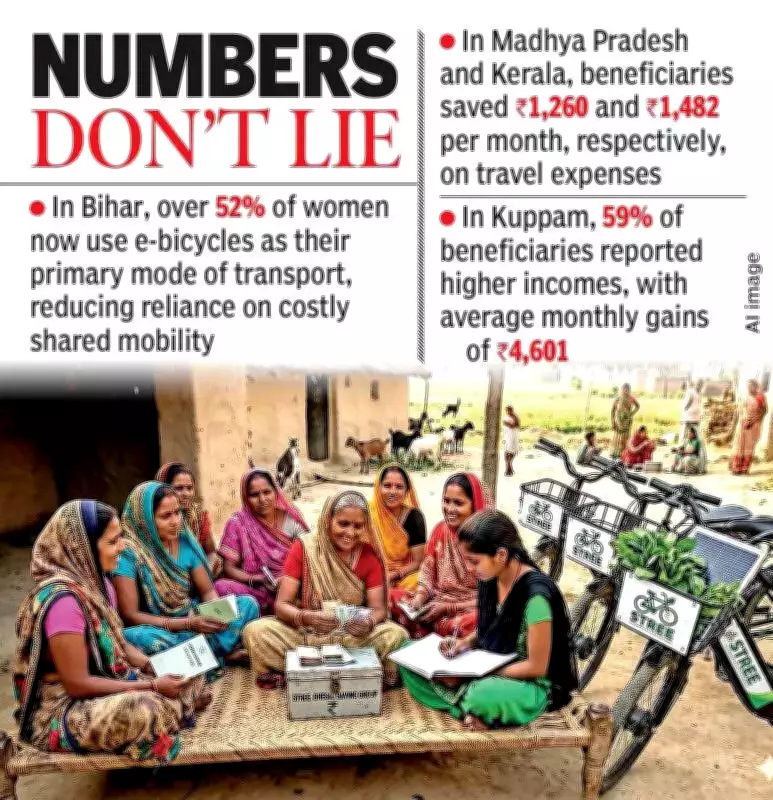
The flagship pilot initiative was implemented across four states: Andhra Pradesh, Bihar, Madhya Pradesh, and Kerala. According to official data, the program covered 1,800 beneficiaries and demonstrated a transformative impact on rural women's lives. The initiative resulted in average monthly savings of Rs 1,351 per woman, alongside enhanced income opportunities and improved mobility.
In Kuppam, Andhra Pradesh, the program showed particularly impressive results, with 59% of beneficiaries reporting income growth. Many women in this region saw average monthly gains of Rs 4,601, significantly boosting their household economies and financial independence.

National Workshop Highlights Program Potential
Addressing a national workshop in New Delhi, Union Minister of State for Rural Development Kamlesh Paswan called upon state governments to partner with the Centre to scale up STREE through coordinated efforts. The minister emphasized that this initiative aligns seamlessly with Prime Minister Narendra Modi's vision of women-led development, green mobility, and a self-reliant rural economy.
"STREE must evolve into a people's movement that empowers women while advancing India's energy efficiency goals," Paswan declared during his address.
Multiple Benefits of Electric Micromobility
Citing global studies, Minister Paswan noted that electric micromobility can increase women's incomes by 25 to 40%, while a lack of safe transport significantly limits workforce participation. "The STREE model directly addresses these barriers by providing affordable, sustainable, and practical mobility solutions," he explained.
The initiative also carries significant environmental benefits. Electric bicycles have one of the lowest carbon footprints among transportation options, emitting approximately 15 grams of CO₂ per kilometre. This makes them an ideal solution for low-carbon rural transport that supports India's climate goals while improving local air quality.
Creating New Rural Entrepreneurial Ecosystems
Shailesh Kumar Singh, Secretary of the Ministry of Rural Development, highlighted the program's broader potential during the workshop. He emphasized how self-help group networks could create a new ecosystem of rural entrepreneurs engaged in various delivery services, including:
- Agricultural produce distribution
- Medicine delivery to remote areas
- Educational materials transport
- Digital services provision
This approach would strengthen last-mile connectivity across villages while creating sustainable income opportunities for women entrepreneurs. The program represents a comprehensive approach to rural development that addresses multiple challenges simultaneously.
Coordinated Implementation Framework
The scaling up of STREE will involve coordinated efforts between multiple government agencies and institutions, including:
- The Ministry of Rural Development
- The Ministry of Power
- Energy Efficiency Services Ltd
- Convergence Energy Services Ltd
- Leading academic institutions like the Indian Institute of Technology, Bombay
This multi-agency approach ensures that technical expertise, implementation capacity, and policy support converge to create a robust framework for nationwide expansion. The program's success in pilot states provides a proven model that can be adapted to different regional contexts across India.






