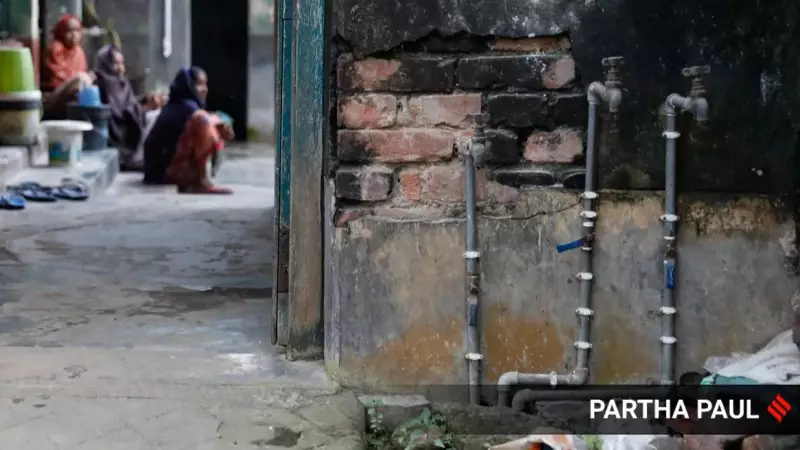
In a significant policy shift, the Central Government has announced stringent conditions for fund disbursement under the Jal Jeevan Mission (JJM). Union Jal Shakti Minister C R Patil stated on Tuesday that states will now receive financial allocations only after signing separate Memoranda of Understanding (MoUs) and demonstrating a consistent 15-day water supply for each scheme.
New Financial Discipline for Water Mission
Addressing a minister-level Policy Dialogue on Sustainable Operation and Maintenance of Rural Drinking Water Services under JJM, Minister Patil emphasized the need for stronger implementation discipline and financial prudence in the mission's next phase. The Ministry of Jal Shakti issued a detailed statement outlining the new framework.
"Following the signing of MoUs, states would receive fund releases, with each scheme mapped through a unique Scheme ID and future releases linked to the demonstration of 15 days of continuous water supply," the official statement clarified.

Rationalization of Development Plans
The Minister directed all states to thoroughly re-examine and rationalize oversized Detailed Project Reports (DPRs). In a crucial clarification, the Ministry specified that only those schemes sanctioned on or before March 31, 2024, would be considered eligible under the revised guidelines.
This move comes amid reports of potential budget adjustments for the flagship water mission, though the government remains committed to expanding rural drinking water coverage across India.
Mission Extension Until 2028
In parallel developments, the Union Cabinet is expected to approve the extension of the Jal Jeevan Mission until 2028 in the coming days. This proposed extension signals the government's continued commitment to universalizing tap water connections in rural households despite evolving implementation strategies.
Shift from Infrastructure to Sustainability
Echoing the need for operational focus, Minister of Panchayati Raj Rajiv Ranjan Singh 'Lalan' emphasized that the mission's priority must now transition firmly from infrastructure creation to sustained operation and maintenance.
"The willingness of villages to pay user charges reflects growing trust in reliable services," Singh noted, highlighting the importance of community participation and financial sustainability in maintaining water supply systems.
This policy refinement represents a strategic evolution in India's approach to rural water security, balancing ambitious coverage targets with practical operational realities and financial accountability mechanisms.