Maharashtra Cabinet Clears Stamp Duty Exemption for Enemy Property Purchases
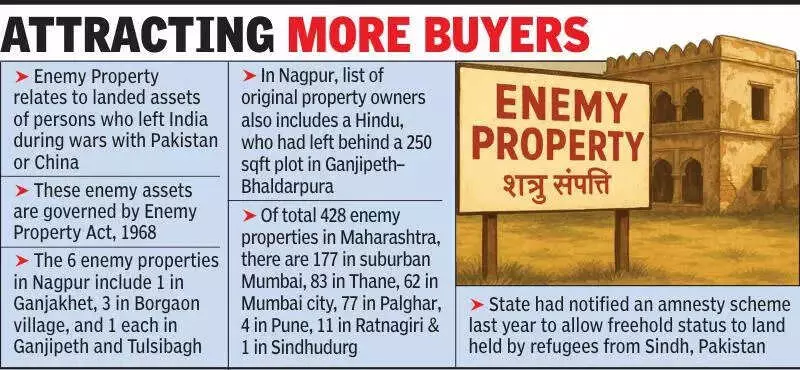
The Maharashtra cabinet on Tuesday approved a significant proposal to exempt the purchase of Enemy Properties from stamp duty. This move targets landed assets belonging to individuals who departed from India during conflicts with Pakistan or China, governed by the Enemy Property Act of 1968.
Boosting Auction Sales Through Incentives
With 428 such properties scattered across Maharashtra, the government aims to encourage buyers to acquire these assets, which are currently managed by the Custodian of Enemy Property in India. An office of the assistant custodian in Mumbai oversees these properties, conducting auctions periodically. However, due to consistently poor responses to auction calls, the state has introduced this stamp duty exemption as a strategic incentive to stimulate interest and transactions.
Nagpur's Six Enemy Properties: A Closer Look
In Nagpur, six properties fall under this category, offering a glimpse into the historical context. These include one in Ganjakhet, three in Borgaon village, and one each in Ganjipeth and Tulsibagh. Many of these properties are linked to Muslim families who migrated to Pakistan during wartime. Interestingly, the list also features a Hindu individual, Shobraj Vadhumal, who left behind a 250 sqft plot in Ganjipeth–Bhaldarpura. Records indicate this property is currently occupied by a Muslim individual, adding a layer of complexity to its history.

The three farmland parcels in Borgaon, spanning an impressive 50 lakh square feet, originally belonged to Zubaida Khatoon, Mohammed Jahiruddin, and Mohammed Qaumurddin. Other owners include Abdul Sattar in Ganjakhet, Itwari Mohammed Yusuf, and Gaffar Ali, reflecting the diverse backgrounds of those who left.
Statewide Distribution and Historical Context
Across Maharashtra, the distribution of Enemy Properties is uneven, with suburban Mumbai leading at 177 properties, followed by Thane with 83, Mumbai city with 62, Palghar with 77, Pune with 4, Ratnagiri with 11, and Sindhudurg with 1. This exemption follows last year's state cabinet notification of an amnesty scheme, which allowed refugees from Pakistan's Sindh province to obtain freehold status for their land by paying specific charges, highlighting ongoing efforts to address legacy property issues.
The historical backdrop includes not only those who left for Pakistan but also Chinese-origin settlers in Kolkata who departed for China around 1962. This policy shift underscores Maharashtra's proactive approach to resolving long-standing property disputes and revitalizing underutilized assets through financial incentives.