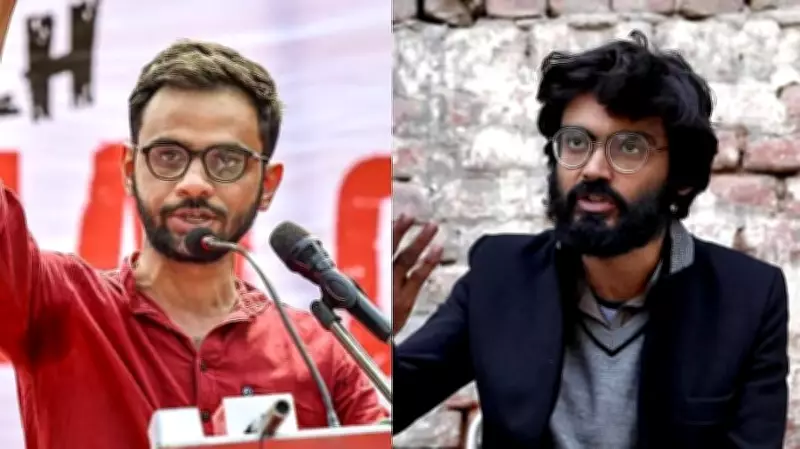
A Delhi court on Saturday denied bail to student activists Umar Khalid and Sharjeel Imam in the larger-conspiracy case related to the 2020 Delhi riots. Additional Sessions Judge Sameer Bajpai of Karkardooma Courts ruled that the bail applications were not maintainable at this stage, as the Supreme Court had barred fresh bail pleas by the duo until the examination of protected witnesses or the expiry of one year from its earlier order, whichever is earlier.
Court's Reasoning
The court observed that the Supreme Court's order from July 2024 explicitly restrained the trial court from entertaining any fresh bail applications until certain conditions were met. The judge stated that the present applications did not fall within any exception to that direction. Both Khalid and Imam have been in custody since September 2020, charged under the Unlawful Activities (Prevention) Act (UAPA) for allegedly conspiring to incite violence during the February 2020 riots in northeast Delhi, which left 53 dead and over 700 injured.
Background of the Case
The case stems from a larger conspiracy allegedly orchestrated by Khalid, Imam, and others to disrupt peace during the protests against the Citizenship Amendment Act (CAA). The Delhi Police's Special Cell filed a charge sheet in 2021, claiming that the accused used speeches and social media to incite violence. Khalid, a former Jawaharlal Nehru University student, and Imam, a former Jamia Millia Islamia student, have consistently denied the charges, arguing that their speeches were peaceful and protected under free speech laws.

Legal Implications
According to legal experts, the Supreme Court's restriction aims to expedite the trial by preventing repeated bail filings. The court has set a timeline for the examination of protected witnesses, who are key to the prosecution's case. The denial of bail means both activists will remain in custody until at least July 2025, unless the Supreme Court modifies its order. The case has drawn significant attention from human rights groups, who argue that the prolonged detention violates due process.