Opposition Parties Accuse TVK Government of Horse-Trading
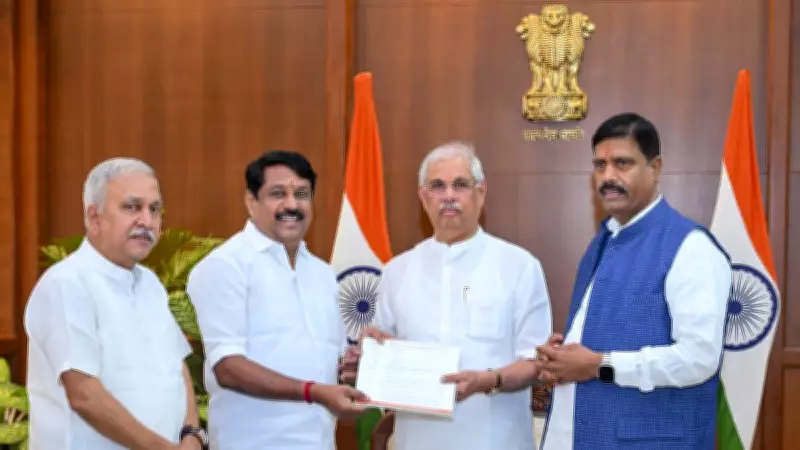
Representatives of the DMK, AIADMK, and Bharatiya Janata Party (BJP) separately submitted petitions to Tamil Nadu Governor R.N. Ravi (Arlekar) on Thursday, alleging that the ruling Tamilaga Vettri Kazhagam (TVK) government is engaged in “horse-trading” by engineering resignations of Members of Legislative Assembly (MLAs) to destabilize the opposition and subvert the electoral mandate.
The three parties, which together command a significant number of seats in the state assembly, expressed serious concern over what they termed as “unethical and undemocratic practices” by the TVK administration. The petitions were submitted in the wake of recent reports that several opposition MLAs have been approached with offers to switch sides, potentially altering the balance of power in the 234-member house.
Separate Meetings with Governor
Each party delegation met Governor Arlekar individually at the Raj Bhavan in Chennai. The DMK team, led by party president M.K. Stalin, submitted a detailed memorandum listing instances of alleged inducements and threats directed at its MLAs. “We have evidence that TVK operatives are offering money and positions to our legislators to resign and join the ruling party. This is a direct attack on democracy,” Stalin told reporters after the meeting.

The AIADMK delegation, headed by interim general secretary Edappadi K. Palaniswami, echoed similar sentiments. “The Governor must intervene to protect the sanctity of the electoral process. The people of Tamil Nadu voted for a stable government, not for a regime that buys and sells MLAs,” Palaniswami said. The BJP team, led by state president K. Annamalai, also submitted a petition, urging the Governor to direct the TVK government to prove its majority on the floor of the house.
TVK Government Denies Allegations
The TVK government, led by Chief Minister Udhayanidhi Stalin, has denied all allegations of horse-trading. In a statement, the party spokesperson called the petitions a “desperate attempt by opposition parties to divert attention from their internal problems.” The TVK, which came to power in the 2026 assembly elections with a comfortable majority, has maintained that it has no need to engineer defections.
However, political analysts note that the TVK’s majority is not unassailable. In the 2026 elections, the party won 118 seats, just two above the simple majority mark of 117. With the DMK (37 seats), AIADMK (33 seats), and BJP (12 seats) holding a combined 82 seats, any significant defection could destabilize the government. “The arithmetic is tight, and the opposition’s concern is not unfounded,” said political commentator Vaasanthi.
Governor’s Response Awaited
Governor Arlekar assured the delegations that he would examine the petitions and take appropriate action in accordance with constitutional norms. “The Governor has a duty to ensure that the democratic process is not subverted. We trust that he will act swiftly to uphold the law,” said DMK’s Stalin. The Governor is expected to seek a report from the state government on the allegations.
The opposition parties have also announced plans to approach the Election Commission of India, demanding a ban on any further defections until a thorough inquiry is conducted. “If the TVK government is confident of its majority, it should face a trust vote immediately. The people of Tamil Nadu deserve transparency,” said AIADMK’s Palaniswami.
Historical Context of Horse-Trading in Tamil Nadu
Tamil Nadu has a history of political instability caused by defections and horse-trading. In 2017, the AIADMK government under O. Panneerselvam faced a similar crisis when several MLAs switched allegiance to then-Chief Minister Edappadi K. Palaniswami. The current allegations, if proven, could mark a return to such practices, raising questions about the robustness of the state’s political system.
Political parties across the spectrum have called for stricter anti-defection laws. The DMK, which has been a victim of defections in the past, has now found itself on the same side as its erstwhile rivals, the AIADMK and BJP, in demanding action against the TVK government. This unusual unity underscores the gravity of the situation.

Meanwhile, the TVK government has dismissed the opposition’s move as a “publicity stunt.” “The opposition is scared of losing its relevance. Instead of petitioning the Governor, they should introspect on why their MLAs are willing to join us,” said a senior TVK minister on condition of anonymity.
Next Steps and Potential Impact
The Governor’s decision could have far-reaching implications. If he orders a floor test, the TVK government will have to prove its majority, potentially exposing any cracks in its coalition. Alternatively, if he dismisses the petitions, the opposition may escalate the matter to the courts or the Election Commission.
For now, the political temperature in Tamil Nadu remains high. “This is not just about one government; it is about the future of democracy in our state,” said BJP’s Annamalai. As the Governor deliberates, all eyes are on Raj Bhavan, where the next chapter of Tamil Nadu’s political drama may unfold.