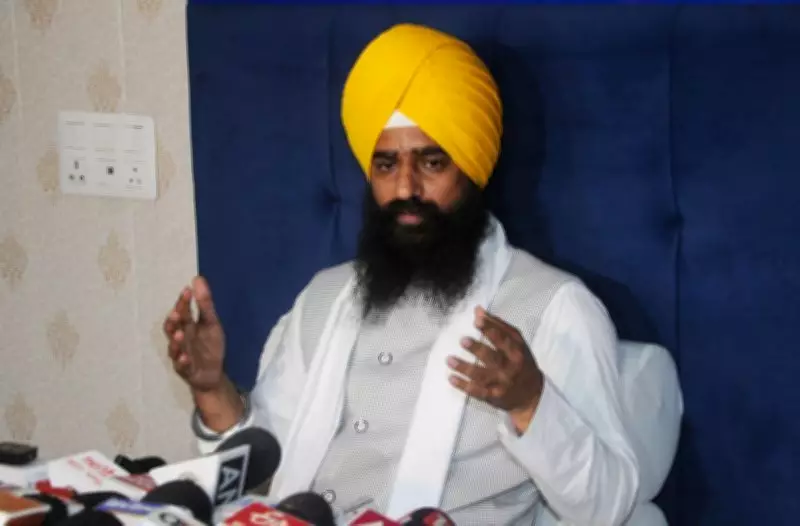
Akal Takht Prepares Objections to Anti-Sacrilege Act
The Akal Takht has compiled a comprehensive list of objections and recommendations regarding the state's anti-sacrilege law, which will be submitted to the Punjab government within days, according to sources. The move follows a June 29 meeting at the Akal Takht secretariat, where ruling Aam Aadmi Party (AAP) legislator and Speaker Kultar Singh Sandhwan assured that the Act would be amended and sought the Takht's input.
The Jaagat Jot Sri Guru Granth Sahib Satkar (Amendment) Act, 2026, came into force in April 2026, triggering significant political and religious controversy. The Akal Takht has suggested at least 10 modifications to five clauses of the law.
Key Recommendations: Removal of Custodian and Central Register Provisions
Among the primary recommendations, the Akal Takht has demanded the removal of all provisions related to the 'custodian' of Guru Granth Sahib. Additionally, it seeks the elimination of requirements for a central register of Guru Granth Sahib volumes (birs), uploading their details on an online portal, and assigning unique identification numbers. According to the objections, such provisions constitute government interference in Panthic (Sikh religious) affairs.

Concerns Over Misuse and Safeguards
A significant objection pertains to Clause 7(5)(1), which prescribes imprisonment of up to five years and a fine ranging from Rs 5 lakh to Rs 10 lakh for violations of the Act's provisions, excluding the offence of sacrilege itself. The temporal authority argues that this clause could be widely misused to settle personal scores through false complaints. It has called for clearer safeguards and a more precise definition of the offence.
Consultation with SGPC and Akal Takht Mandated
The Takht has also raised concerns over Section 6A, which empowers the government to frame rules via official notification. It recommends that no rules or future amendments should be notified without prior consultation and approval from the Shiromani Gurdwara Parbandhak Committee (SGPC) and the Akal Takht.
Terminology Change: 'Bir' vs 'Saroop'
Another objection involves replacing the traditional Sikh term 'bir' with 'saroop'. While the original 2008 law used 'bir', the amended version substitutes it with 'saroop'. The Akal Takht opposes this change.
Addressing Social Causes Behind Sacrilege
Akal Takht officiating Jathedar Giani Kuldeep Singh Gargaj has argued that the law should address social causes behind sacrilege rather than merely its technical and legal aspects. According to him, the law should not be confined to punishing the individual who commits sacrilege but should also deal with those who instigate, organise, or facilitate such acts. He drew parallels with laws related to dowry deaths and caste-based crimes, where legal liability extends beyond the principal offender to those who provoke or enable the crime.
Dera Heads and Fast-Track Courts
Gargaj referred to the 2015 sacrilege incidents and the alleged involvement of followers of Dera Sacha Sauda. He proposed that if a complainant names the head of a dera or organisation while reporting an act of sacrilege committed by a follower, the law should allow naming the head in the FIR, subject to a transparent investigation. The Akal Takht has further recommended establishing dedicated fast-track courts for the expeditious trial of sacrilege cases.