Ama Bus Service: From Public Transport Solution to Public Safety Nightmare
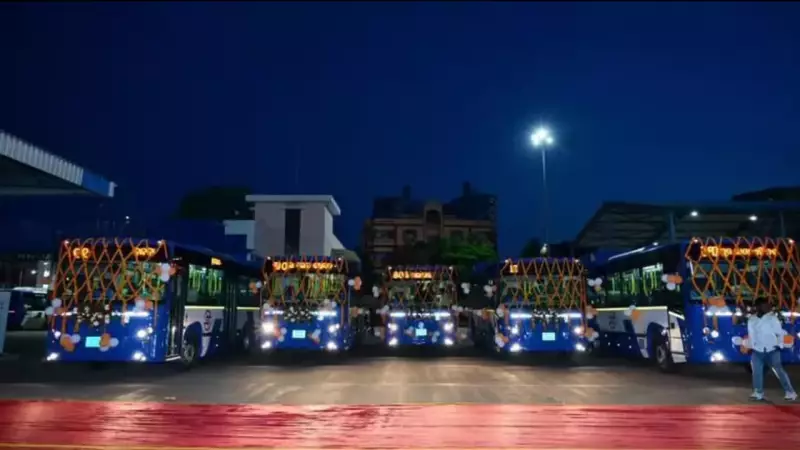
What was once hailed as a modern public transport solution for Odisha's urban centers has now become a source of public outrage and tragedy. Since its introduction in 2018, the Ama Bus service, operated by Capital Region Urban Transport (CRUT) and rebranded from Mo Bus, has claimed 22 precious lives and left over 50 people injured in Bhubaneswar and Cuttack. Behind these grim statistics lie shattered families whose dreams have been dashed as they struggle to piece together their lives.
Families Left in Despair: Personal Stories of Loss
For Namita Patra, January 3 began like any ordinary day as she saw off her husband Bishnu Patra, an autorickshaw driver, to work. Hours later, a devastating phone call shattered her world - Bishnu had been crushed under the wheels of an Ama Bus at Rupali Square. The father of two and sole breadwinner was gone forever.
"We don't want the compensation announced by the government," says Namita, a filariasis patient struggling to raise her college-going daughter and Plus II student son. "Both my children are too young to take responsibility. I request the government to give us a permanent job."
Her son Ashish adds, "The authorities should take responsibility so that such incidents wouldn't occur again."
Multiple Tragedies Across the Region
The Patra family's grief is far from isolated. Since July 2024 alone, nearly 12 people have died in accidents involving Ama Buses. In Raghunathpur, Savitri Juadi continues to console her children after losing her 12-year-old daughter Muni in February 2025. The young girl was dragged to death by an Ama Bus while crossing the road to buy biscuits for her father.
"Kuni, my younger daughter who recently got admission into a college, refuses to step out. She fears crossing the road," Savitri reveals, highlighting the psychological trauma these accidents inflict beyond physical loss.
In September 2024, another tragedy struck at the same Raghunathpur spot where Muni died - a man riding his two-wheeler was run over by an Ama Bus. On December 26 last year, 35-year-old construction supervisor Lokanath Das was crushed under an Ama Bus at Bharatpur-Chandaka Road, leaving behind his wife Rojalin and seven-year-old son Bibek.
"He was our world," says Rojalin, demanding justice for her husband's untimely death. Lokanath's father, a retired government employee, blames reckless driving for the tragedy.
Compensation Delays and Community Outrage
The aftermath of these accidents reveals systemic failures in addressing victims' needs. Brundabana Sahoo still hasn't received any compensation for the death of his brother Sudarsan last December. The 51-year-old was on a bike with Brundabana when an Ama Bus hit their vehicle near Satsang Vihar on NH-16 and fled the scene.
"We want justice for our brother," Brundabana insists, echoing the frustration of many affected families.
In May 2024, Trinath Barik died under Khandagiri Flyover, leaving his daughter Babita to recount the tragedy. "My father worked as a mall security guard," she says. "Some locals vandalised the Ama bus and demanded Rs 50 lakh as compensation for my father's death. He didn't deserve to die like this."
Systemic Failures and Expert Analysis
Road safety experts have identified multiple systemic gaps contributing to these recurring tragedies. Syed Maqbool Ali, a former member of the National Road Safety Council, points to lack of speed governors, inadequate pedestrian safety measures, and poor monitoring of drivers as critical issues.
"Public transport should save lives, not take them," Ali emphasizes, urging authorities to strengthen enforcement mechanisms.
Local residents have consistently alleged rash driving and poor enforcement of speed limits as primary causes behind these accidents. Commuter Pradipta Nayak expresses the growing public sentiment: "Ama Bus was supposed to make commuting safer. Instead, it has become a horror. Drivers seem to be in a race. Where is the accountability?"
Families' Demands for Meaningful Change
Victims' families are united in their demands for comprehensive reforms:
- Stricter training programs for drivers with emphasis on defensive driving techniques
- Effective speed regulation measures including mandatory speed governors
- Substantial compensation beyond token amounts that addresses long-term family needs
- Improved pedestrian safety infrastructure at accident-prone locations
- Regular monitoring and accountability mechanisms for driver behavior
For Namita, Savitri, Rojalin, Babita, Brundabana and countless others affected by Ama Bus tragedies, life will never return to normal. Their stories serve as a chilling reminder that behind every accident statistic lies a family torn apart, dreams destroyed, and futures uncertain. As the death toll continues to rise, urgent intervention from authorities becomes not just necessary but imperative to prevent further loss of innocent lives on Odisha's roads.