

Assam Rifles Havildar Withdraws Bail Plea in Major Tiger Poaching Syndicate Case
In a significant development in a major wildlife trafficking investigation, an Assam Rifles havildar accused of involvement in a large transborder tiger poaching network withdrew his bail application before the Nagpur bench of the Bombay High Court on Thursday. The court had begun dictating an order rejecting the plea when the accused's counsel sought permission to withdraw the application.
Court Proceedings and Withdrawal
Accused Kapliyan Mung, a havildar with Assam Rifles, had moved the court through Meghalaya advocate general and senior counsel Amit Kumar, seeking bail in a case arising from a major wildlife trafficking investigation conducted by the forest department in Rajura in Chandrapur district. Justice MM Nerlikar noted that after hearing the matter, when the court showed its disinclination to grant bail, the senior counsel appearing for the petitioner sought permission to withdraw the application.
"He seeks liberty to file a fresh application before the trial court after 6 months," Justice Nerlikar said while disposing of the case. This withdrawal came as the court was actively dictating its order to reject the bail plea, indicating the strength of the prosecution's case against the accused.

The Transborder Poaching Network
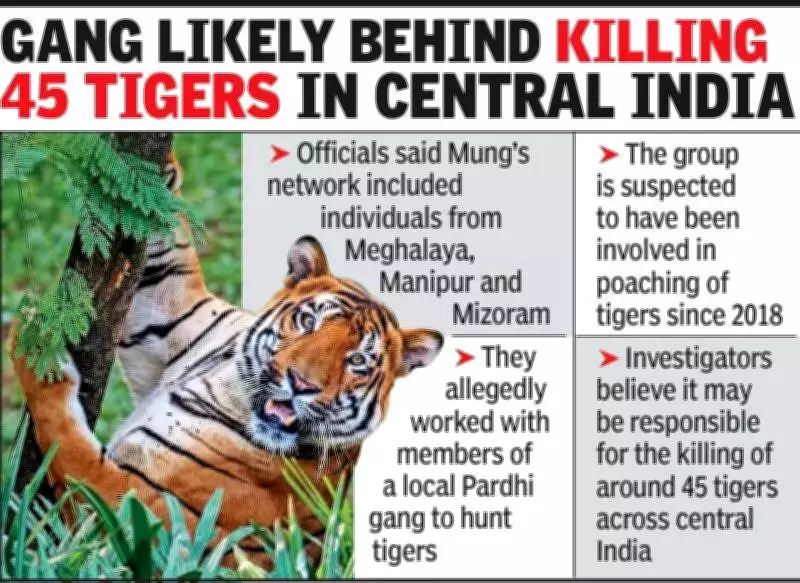
According to investigators, this case has exposed a sophisticated poaching syndicate operating across Central India that allegedly hunted tigers and trafficked their body parts through international routes. The investigation has so far identified 21 accused, of whom 15 have been arrested. Officials revealed that Mung's network included individuals from Meghalaya, Manipur, and Mizoram who allegedly worked with members of a local Pardhi gang to hunt tigers.
The group is suspected to have been involved in tiger poaching since 2018, and investigators believe it may be responsible for the killing of around 45 tigers across central India. Cases were registered under the Wildlife Protection Act, 1972, and the trial began before a magistrate court.
Prosecution's Allegations
During the hearing, the prosecution led by senior counsel and government pleader Deven Chauhan presented compelling evidence against Mung. The petitioner seeking bail is the husband of the main accused, Nim San Lun. Chauhan told the court that the accused assisted the network in transporting tiger parts across the border to Myanmar, from where they were allegedly trafficked to China.
"He told the court the accused helped his wife and other members of the syndicate pack tiger body parts into vegetable packets and transported them discreetly across the border," the prosecution revealed. This method of concealment demonstrates the sophisticated nature of the trafficking operation.
Military Experience Used for Illegal Activities
The prosecution further alleged that Mung assisted transporters by providing alternate routes through rivers and waterways to evade surveillance by border security forces and other defense personnel. His knowledge of these routes was directly linked to his experience while serving in Assam Rifles, raising serious concerns about the misuse of military training for criminal activities.
Additionally, photographs recovered from the mobile phone of the accused's wife showed tiger body parts that were allegedly trafficked through the network, providing visual evidence of the crimes.
Unique Challenges in Wildlife Crime Prosecution
Chauhan argued that wildlife crimes often unfold without direct witnesses and involve victims who cannot speak for themselves. "Nobody witnessed the crime committed against these speechless creatures. Nobody saw these creatures with the accused, and nobody is there to give testimony to what happened to the tigers," Chauhan argued, describing the racket as "a transborder crime syndicate."
This case highlights the complex challenges in prosecuting wildlife crimes, where evidence must often be pieced together from forensic analysis, surveillance, and financial trails rather than eyewitness testimony. The withdrawal of the bail application represents a significant step in the legal proceedings against this alleged international wildlife trafficking network.






