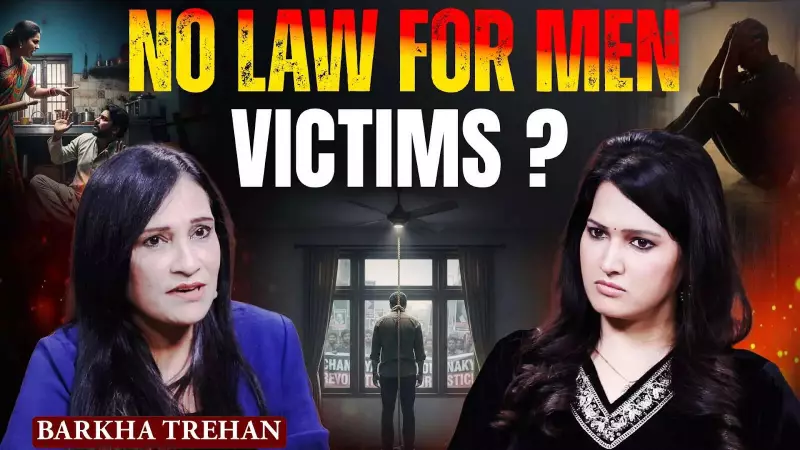
In a candid discussion that has sparked widespread debate, activist Barkha Trehan has brought the issue of male rights and the glaring absence of specific legal protections for men in India into sharp focus. Speaking on January 8, 2026, Trehan argued that the country's existing legal framework often overlooks the struggles faced by men, creating a systemic imbalance that needs urgent addressal.
The Core Argument: A System Skewed Against Men?
Barkha Trehan's central thesis revolves around the perceived one-sided nature of many Indian laws. She emphasized that while protections exist for various groups, there is a significant lack of dedicated legislation safeguarding men's rights in areas like family law and false accusations. This gap, she contends, leaves men vulnerable and without legal recourse in specific situations, impacting their mental health and social standing.
Trehan stressed the need for a more balanced and gender-neutral legal approach that ensures justice for all, irrespective of gender. Her call is not for the dilution of women's rights but for the creation of a more equitable system where men's legitimate concerns are also heard and addressed through formal legal channels.

Case Studies: Atul Subhash and Meerut Blue Drum
To underline her points, Trehan referenced two prominent cases: the Atul Subhash case and the Meerut Blue Drum case. Although specific details of these cases were not elaborated in the initial discussion, they are presented as emblematic examples of systemic failures. These cases are used to highlight scenarios where men allegedly faced injustice due to legal loopholes or societal biases, underscoring the urgent need for legal awareness and reform.
By bringing these cases into the public discourse, Trehan aims to move the conversation beyond abstract principles to tangible instances where the call for fair laws and justice for men becomes critically relevant.
The Path Forward: Dialogue, Awareness, and Reform
The discussion concluded with a forward-looking perspective. Barkha Trehan advocated for a multi-pronged approach to bridge the existing gap. This includes fostering meaningful public dialogue to break the stigma around discussing men's issues, driving legal awareness campaigns to educate citizens about their rights, and pushing for thoughtful legal reforms that create a more just and balanced system for everyone.
Her message is clear: achieving true gender equality requires acknowledging and addressing the challenges faced by all genders. The conversation initiated by Trehan is a significant step towards a more inclusive debate on social justice and legal parity in India.