Calcutta High Court Clarifies Constitutional Limits on Protest Rights
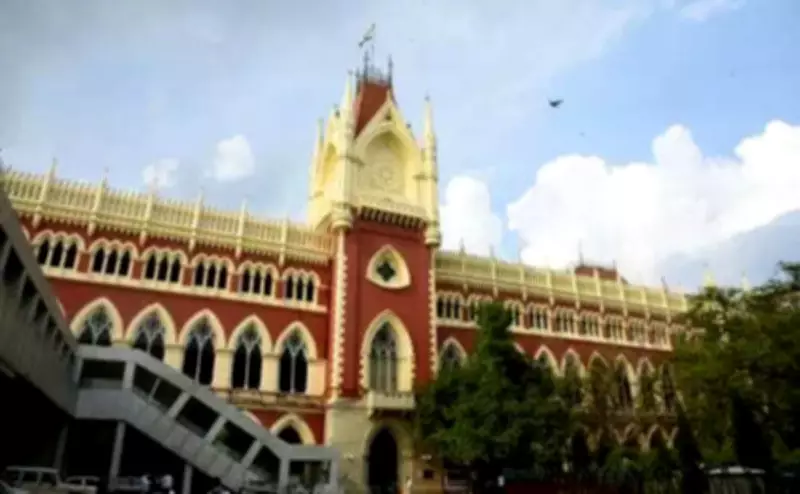
In a significant ruling that clarifies the boundaries of protest rights in India, the Calcutta High Court has emphasized that constitutional guarantees under Article 19 are not absolute and can be subject to reasonable restrictions. The court made this observation while rejecting the Bengal BJP's plea challenging restrictions on their planned sit-in demonstration in front of Nabanna, the state secretariat.
Court Rejects BJP's Argument on Protest Location
A division bench comprising Chief Justice Sujoy Paul and Justice Partha Sarathi Sen dismissed the BJP's contention that disallowing their demonstration specifically in front of Nabanna amounted to taking away their fundamental right to protest. The bench stated clearly: "The right guaranteed under Article 19 of the Constitution is not an absolute right but can be subject to limitations."
The court further elaborated that "a demonstration cannot take place at whatever place the demonstrators please", directly addressing the core argument presented by the petitioner. This ruling came in response to Bengal BJP chief whip Sankar Ghosh's challenge against a single judge order that had permitted the demonstration at Mandirtala bus stand instead of Nabanna, with specific time restrictions from 10 AM to 4 PM.
Legal Arguments and Constitutional Interpretation
During the proceedings, senior counsel Billwadal Bhattacharyya, representing Ghosh, argued vigorously that:
- The right to protest constitutes a fundamental right in India's constitutional democracy
- Prohibitory orders under Section 144 CrPC (Section 163 of BNSS) cannot be issued for unlimited periods
- The petitioner had a valuable right to conduct a "dharna" specifically in front of Nabanna
However, the Advocate General countered these arguments by stating that it was a "misconceived notion" that petitioners had any absolute fundamental right under Article 19 to hold demonstrations at any place or time. He emphasized that the power conferred by Section 144 CrPC is exercisable not only where immediate danger exists but also when there is a reasonable apprehension of danger.
Court's Reasoning and Supreme Court Precedents
The High Court bench carefully examined relevant Supreme Court judgments and concluded: "The common string flowing from the aforesaid judgments of the Supreme Court shows that the State is empowered to impose reasonable restrictions on a demonstration."
The court specifically addressed the location argument, stating: "If, in front of Nabanna, the state headquarters, demonstrations were not permitted, it cannot be said that the right to protest is taken away." The bench further noted that they were "unable to persuade ourselves with the line of argument" that declining permission for protests specifically in front of Nabanna violated Article 19 rights.
Background and Political Context
The case originated from the Bengal BJP's planned protest against what they alleged was the Chief Minister's obstruction to an Enforcement Directorate search at I-PAC offices. While the single bench had permitted the demonstration at an alternative location with specific conditions, the BJP sought to challenge these restrictions, leading to this important constitutional clarification from the division bench.
This ruling establishes significant legal precedent regarding:
- The reasonable restrictions that can be placed on protest locations
- The state's authority to regulate demonstrations near sensitive government installations
- The interpretation of Article 19 rights in practical protest scenarios
The Calcutta High Court's decision reinforces the principle that while protest rights are fundamental to democracy, they must be balanced against considerations of public order, security, and reasonable restrictions as permitted under the Constitution.