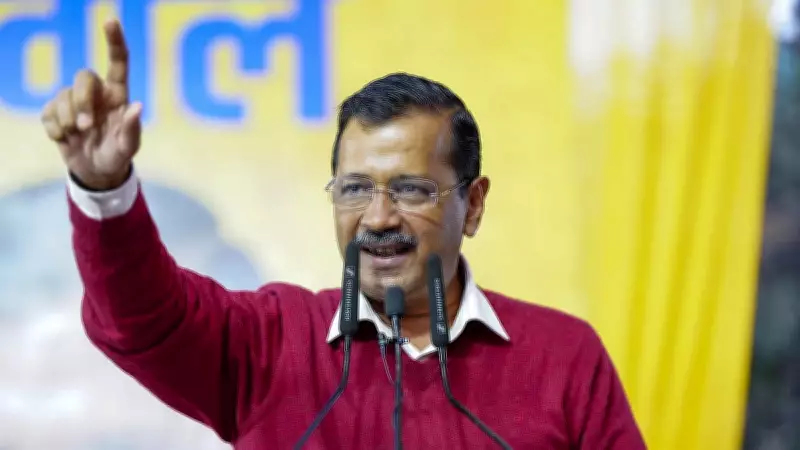
CBI Counters Kejriwal's Recusal Request in High Court
The Central Bureau of Investigation (CBI) has formally opposed an application filed by Delhi Chief Minister Arvind Kejriwal, arguing that he cannot seek the recusal of a judge merely because she attended a seminar organized by the Akhil Bharatiya Adhivakta Parishad (ABAP). In a submission to the High Court, the agency contended that such attendance does not constitute grounds for reasonable apprehension of bias or lack of impartiality in judicial proceedings.
Kejriwal's Application and Allegations of Partiality
Kejriwal, through his legal team, had filed the application requesting the recusal of Justice Sharma from hearing his case. The application claimed there was a reasonable apprehension that the hearing before Justice Sharma would not be impartial and neutral, citing her participation in the ABAP seminar as a potential conflict of interest. The ABAP is a lawyers' organization with perceived ideological leanings, leading Kejriwal to argue that this could influence the judge's neutrality in matters involving political figures.
CBI's Legal Argument Against Recusal
In response, the CBI presented a detailed legal argument, emphasizing that a judge's attendance at professional or educational seminars, including those hosted by legal associations like the ABAP, is a routine part of judicial engagement and continuous learning. The agency stated that such participation does not automatically imply any bias or predisposition in favor of a particular party in a case. The CBI further highlighted that recusal should only be granted in exceptional circumstances where there is clear evidence of prejudice, which they assert is absent in this instance.

The CBI's submission stressed that the principles of judicial independence and fairness must be upheld, and recusal requests based on tangential associations could undermine the integrity of the judicial process. They urged the High Court to dismiss Kejriwal's application, allowing the proceedings to continue without interruption.
Broader Implications for Judicial Proceedings
This development adds another layer to the ongoing legal battles involving Kejriwal, who has faced multiple investigations and cases. The High Court's decision on this recusal plea could set a precedent for how similar requests are handled in the future, particularly in high-profile political cases. Legal experts note that while recusal is a vital tool to ensure fair trials, its misuse could lead to unnecessary delays and erode public trust in the judiciary.
The case continues to draw significant attention, with implications for both the political landscape and judicial standards in India. As the High Court deliberates, stakeholders await a ruling that balances the right to a fair hearing with the need to prevent frivolous recusal attempts.