Special Court Accepts EOW Closure Report, Clears Pawars in Massive MSCB Scam Case
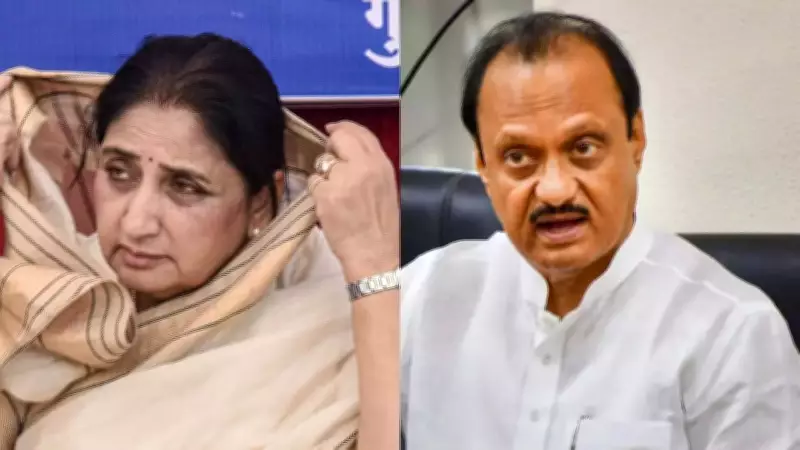
A special court designated for cases involving Members of Parliament and Legislative Assembly has formally accepted the Economic Offences Wing's closure report in the high-profile Rs 25,000-crore Maharashtra State Cooperative Bank scam. The court's decision provides significant relief to the late Ajit Pawar, current Deputy Chief Minister Sunetra Pawar, and their nephew, NCP-SP MLA Rohit Pawar, who were under investigation.
Court's Key Findings and Rationale
In a detailed 127-page common order made available on Monday, Special Judge Mahesh K Jadhav delivered several crucial observations that formed the basis for accepting the closure report. The court held in multiple instances that "no loss was caused to the bank due to allotment of loan" and conclusively determined that "no personal wrongful gain is acquired by directors."
The court explicitly stated that no criminal conspiracy was hatched by any of the accused. Regarding Rohit Pawar's company, Baramati Agro, the court affirmed that proper legal procedures were followed during the 2012 auction of Kannad Sahakari Sugar Factory.
Judge Jadhav emphasized in his order: "Merely irregularity or lapses cannot be converted to the offences. There is absence of dishonest or fraudulent intention on the part of the accused. The dishonest or fraudulent intention is missing."
The court further clarified: "There is no prior meeting of minds or agreement between the directors to do an illegal action by illegal means. No personal wrongful gain is acquired by the directors. Mens rea (intention) is totally absent."
Background of the Massive Cooperative Bank Scandal
The alleged Rs 25,000-crore Maharashtra State Co-operative Bank scam involves 31 district central co-operative banks operating under the MSCB umbrella, most named after districts and traditionally headed by senior politicians. These banks were accused of granting loans to cooperative sugar factories in clear violation of established banking rules and regulations.
When these factories subsequently defaulted on their repayment obligations, MSCB initiated auction proceedings to recover the outstanding loan amounts through the sale of their properties. The central allegation claimed that the auction process was systematically manipulated to ensure that most mills were sold to relatives or close associates of bank office-bearers at significantly undervalued prices, thereby causing substantial financial losses to the bank.
The scandal first came to public attention after activist Surinder Arora filed a Public Interest Litigation in the Bombay High Court demanding a thorough investigation. In 2019, police registered a formal case against an unnamed former chief minister, deputy chief minister, various ministers, and bank directors. The case was subsequently transferred to the Mumbai Police's Economic Offences Wing for specialized investigation.
Investigation Timeline and Key Developments
The Enforcement Directorate initiated its parallel probe based on the EOW's First Information Report. In 2023, the ED filed its initial chargesheet against Jarandeshwar Sugar Mills Ltd concerning the purchase of Jarandeshwar Sugar Co-operative Mill. This chargesheet mentioned connections to Ajit Pawar and Sunetra Pawar but notably did not name them as accused. Later, the ED submitted a supplementary chargesheet naming NCP MLA Prajakt Tanpure among others.
The EOW's investigation followed a complex trajectory:
- 2020: EOW filed its first closure report when Ajit Pawar served as Deputy Chief Minister in the Maha Vikas Aghadi government.
- 2022: EOW sought to reopen the case for further investigation into suspicious deals involving the Pawars and other transactions, referencing the ED's ongoing money laundering probe.
- January 2024: EOW submitted its second closure report, providing a clean chit to the late Ajit Pawar, Deputy CM Sunetra Pawar, and Rohit Pawar.
Enforcement Directorate's Allegations and Court Response
The ED's intervention plea detailed what it described as "suspicious financial links" between politicians and four auctioned mills. In the Jarandeshwar Mill case, the ED stated that the mill was sold by MSCB for Rs 65.75 crore to Guru Commodity Pvt Ltd in 2010. Shortly thereafter, Guru Commodity leased the mill to newly incorporated Jarandeshwar Sugar Mills Ltd.
The ED highlighted that "the director of Jarandeshwar Sugar Mills Ltd, Rajendra Ghadge, is the maternal uncle of Ajit Pawar, who was then a director of the bank." The agency further claimed that funds for the mill purchase originated from Jarandeshwar Sugar Mills, which received Rs 20 crore from Jay Agrotech Pvt Ltd, a company where Sunetra Pawar serves as director.
Regarding Rohit Pawar's involvement, the ED linked his company Baramati Agro to the purchase of Kannad Sugar Co-operative Mill. The agency alleged that Hitech Engineering Corporation India, one of the co-bidders, received Rs 5 crore from Baramati Agro just before the auction specifically to pay the earnest money deposit required for bidding participation.
The ED contended: "There are various materials on record indicating that the promoters (Rohit Pawar and his father) of Baramati Agro Ltd induced Hitech Engineering to participate in the bidding process to project it as a competitive one."
Protest Petitions and Court's Final Determination
More than 50 petitioners, including original complainant Surinder Arora, social activist Anna Hazare, and several agriculturists, challenged the EOW's closure report. They alleged multiple violations including criminal breach of trust, fraud, falsification of accounts, misappropriation of funds, and breaches of NABARD, RBI, and SARFAESI regulations.
The petitioners argued that loans were improperly extended to units with negative net worth and that the auction process involved self-dealing by directors. They further claimed the EOW conducted an inadequate investigation that relied excessively on earlier inquiry reports while failing to examine key witnesses.
On February 27, 2026, the special court for MPs/MLAs accepted the closure report while simultaneously rejecting the ED's plea to intervene. The court noted that a similar plea against the first closure report had already been rejected, with an appeal pending before the Bombay High Court. The court also dismissed all protest petitions filed by the various individuals.
Potential Impact on Parallel Money Laundering Case
This development has significant implications for the parallel money laundering case being pursued by the Enforcement Directorate. On March 2, 2026, MLA Rohit Pawar and several other accused in the money laundering case related to the MSCB scam moved the special court seeking discharge.
In his plea filed through advocate Kushal Mor, Pawar argued that there was no evidence of money laundering against him and pointed specifically to the closure of the predicate offence upon which the ED case is fundamentally based. The Supreme Court's July 27, 2022 ruling established that in the absence of a predicate offence, proceedings under the Prevention of Money Laundering Act cannot legally continue.
The court has directed the prosecution to file its reply to the discharge applications, with the matter scheduled for hearing on March 17. The closure of the scheduled offence represented by the EOW's FIR creates substantial legal hurdles for the continuation of the money laundering prosecution under established judicial precedent.