

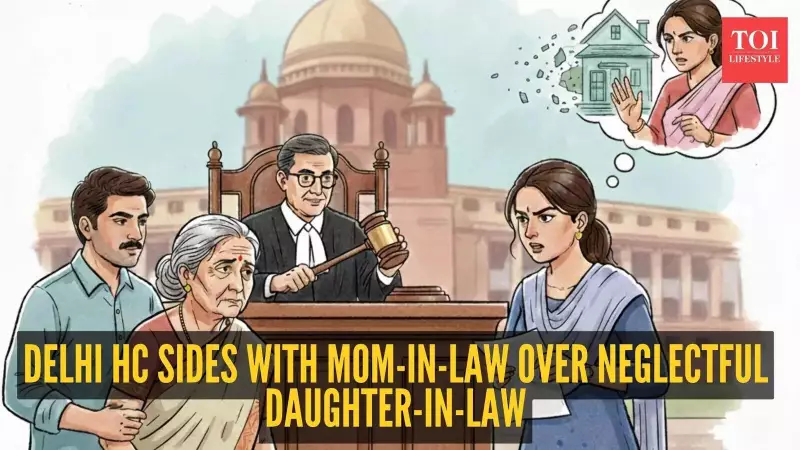
In a significant ruling that reinforces protections for the elderly, the Delhi High Court has upheld the cancellation of a gift deed executed by an 88-year-old woman in favour of her daughter-in-law. The court found that the transfer was made with an implicit expectation of care and support in old age, an obligation that was not fulfilled.
The Heart of the Dispute: A Broken Promise of Care
The case centred around Smt. Daljit Kaur, who on May 5, 2015, gifted her property to Smt. Varinder Kaur, the wife of her late son. The act was rooted in familial love and the belief that her daughter-in-law would look after her in her advanced years. However, after receiving the property, Smt. Varinder Kaur allegedly ceased providing even basic support and care to the elderly woman.
This neglect prompted Smt. Daljit Kaur to seek legal recourse. She approached the authorities and filed a case before the Tribunal under Section 23 of the Maintenance and Welfare of Parents and Senior Citizens Act, 2007. This provision empowers the Tribunal to declare a property transfer void if it was made after the Act came into force and the transferee, who is expected to provide essential amenities and physical care, fails to do so.

Court's Landmark Interpretation: Implied Condition of Care
On September 26, 2025, a Division Bench of the Delhi High Court delivered its judgment (2025:DHC:8641-DB), dismissing the daughter-in-law's appeal and granting relief to the senior citizen. The court, noting that Smt. Daljit Kaur was represented by Advocate Siddharth Banthia and the GNCTD by Ms. Vaishali Gupta, framed a crucial legal question.
The Bench examined whether the gift, though lacking an explicit maintenance clause, was made with an implicit condition of care. The court decisively ruled that in familial settings, gifts made out of "love and affection" naturally carry an expectation of support in return. The judges observed that elderly parents typically transfer property to their children or children-in-law with the hope of being cared for in their old age. When this care is withheld, Section 23(1) of the Act becomes applicable.
The judgment relied on several key precedents to solidify this interpretation:
- Supreme Court in Urmila Dixit v. Sunil Sharan Dixit (2025) 2 SCC 787: Reaffirmed that the protection under Section 23 is intrinsically linked to the Act's purpose of preventing abandonment of the elderly after they part with their property.
- Bombay High Court in Nitin Rajendra Gupta: Held that demanding an explicit maintenance clause in every gift deed would defeat Section 23's intent, as most elderly donors would not think to insert such a term.
- Madras High Court in Mohamed Dayan: Emphasised that "love and affection" itself operates as an implied condition under the law.
Evidence and Final Outcome
The Delhi High Court clarified that while the initial application may not have detailed the condition of support, the Tribunal must consider all material on record. In this case, handwritten letters and applications submitted by Smt. Daljit Kaur clearly established that the gift was motivated by the expectation of care, which was subsequently denied.
The court noted that the District Magistrate, acting as the appellate authority, had correctly invoked the deeming provision under Section 23(1) to cancel the deed. The Single Judge's order, which had earlier dismissed the daughter-in-law's writ petition after a thorough review, was also upheld in its entirety by the Division Bench.
Consequently, the appeal was dismissed. The court ordered no costs, bringing a close to the legal battle that began with a promise of familial care and ended with a powerful affirmation of the rights of senior citizens in India.






