

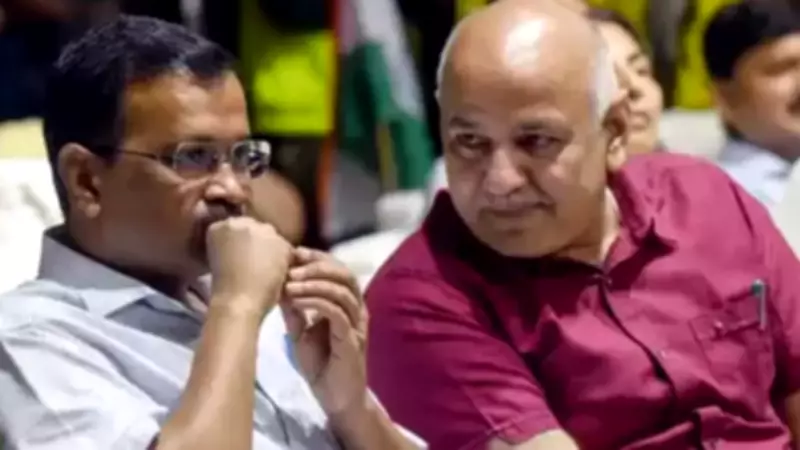
Delhi High Court Issues Final Warning to Kejriwal and Sisodia in ED's Plea Over Remarks
The Delhi High Court has delivered a stern message to former Chief Minister Arvind Kejriwal, his deputy Manish Sisodia, and other respondents, granting them one last opportunity to file their responses in a significant plea by the Enforcement Directorate (ED). The federal agency is seeking to expunge what it terms as "unwarranted" remarks made against it by a trial court during the discharge of the accused in the high-profile liquor policy case.
Court Sets April 22 for Hearing as Most Respondents Fail to Reply
Justice Swarana Kanta Sharma, presiding over the case, expressed clear frustration with the lack of compliance from the respondents. Noting that only one individual, Vinod Chauhan, had submitted a reply despite previous extensions, the judge emphasized that this would be the final chance. "Last opportunity is granted to file reply, failing which the right to file reply will stand closed. Arguments will be heard on the next date of hearing," Justice Sharma stated firmly.
The court has scheduled the next hearing for April 22, when it will begin hearing arguments on the ED's petition. This decision follows a previous order on March 19, which had allowed Kejriwal and the other respondents time until April 2 to respond. However, the majority failed to meet this deadline, prompting the court's latest intervention.

ED's Argument: Remarks Constitute Judicial Overreach
Representing the Enforcement Directorate, Additional Solicitor General S V Raju highlighted the agency's position during the proceedings. The ED contends that the trial court's observations were extraneous and irrelevant to the Central Bureau of Investigation's (CBI) case, in which the ED was not a party and had no opportunity to present its side.
In its petition, the ED argues that these remarks amount to judicial overreach and could cause "grave and irreparable prejudice" to the public and the agency itself. "If such sweeping, unguided and bald observations are permitted to stand, grave and irreparable prejudice would be caused to the public at large as well as the petitioner," the ED stated, urging the High Court to expunge the comments to prevent any misinterpretation or undue influence on ongoing investigations.
Background and Implications of the Liquor Policy Case
The case revolves around allegations related to Delhi's now-scrapped liquor policy, which has been a focal point of legal and political scrutiny. Key points include:
- The trial court had discharged Kejriwal, Sisodia, and others in this matter, but made certain observations critical of the ED's role.
- The ED asserts that these remarks are unnecessary and could undermine its investigative authority.
- With the High Court's final warning, the respondents must now act swiftly to avoid losing their chance to present their stance formally.
This development underscores the ongoing tensions between investigative agencies and judicial observations in high-stakes cases. As the April 22 hearing approaches, all eyes will be on how Kejriwal, Sisodia, and the other respondents choose to proceed, potentially shaping the legal narrative around the liquor policy controversy.






