New Epstein Files Revive Jail Death Questions Seven Years Later
Nearly seven years after the death of disgraced financier and convicted pedophile Jeffrey Epstein, newly released Justice Department files have reignited intense scrutiny over the events inside a New York jail cell in the early hours of August 10, 2019. The documents detail a series of lapses, inconsistencies, and mysterious occurrences that continue to fuel speculation about the true nature of his demise.
Background and Initial Incidents
Epstein, aged 66, was arrested on July 6, 2019, at Teterboro Airport in New Jersey and held at the Metropolitan Correctional Center in Manhattan while awaiting trial on federal sex trafficking charges. After pleading not guilty, he was placed in the jail's Special Housing Unit due to safety and suicide concerns. On July 23, he was found semi-conscious in his cell with an orange fabric noose around his neck, accusing his cellmate, Nicholas Tartaglione, of attempted murder. Tartaglione denied this and later claimed in a pardon petition that he was deliberately placed with Epstein to facilitate harm, a claim the White House refuted.
The following day, Epstein met with a prison psychologist and firmly denied any suicidal intentions, stating, "I have a life and I want to go back to living my life." Despite this, he remained under surveillance, and after a period on suicide watch, he was returned to the Special Housing Unit on July 30 with a new cellmate and placed in a cell near correctional officers. Due to a "PSYCH Alert" status, he was supposed to receive 30-minute wellness checks and unannounced rounds.
Talks of Cooperation and a New Will
On July 29, federal authorities met with Epstein's lawyers to discuss potential case resolution and his cooperation, as noted in an FBI report. However, the defense did not specify the nature of any cooperation. Shortly after, on August 8, Epstein signed a new will, placing $577 million into a trust fund. His girlfriend, Karyna Shuliak, was designated to receive the bulk of his estate, including $50 million in cash and multiple properties, while Ghislaine Maxwell and his brother Mark were each left $10 million.
Lapses and Suspicious Events Inside the Jail
On August 9, Epstein's cellmate was moved out and not replaced, contrary to instructions that he should not be left alone. That morning, he met with his lawyers as new court documents alleging further abuse were released. An official statement about his death was mistakenly drafted with the date August 9 instead of August 10, which the Department of Justice later attributed to an "unfortunate typo" and denied any premeditation.
Guards Tova Noel and Ghitto Bonhomme began their shift at 4 pm but failed to complete scheduled inmate counts, though they recorded them as done. Epstein did not return to his cell until 6:45 pm after meeting his lawyers. At 10 pm, inmates were locked in for the night, but the guards again did not conduct required counts, falsely documenting them. Surveillance footage at 10:30 pm showed Noel briefly walking to and from the entrance to L Tier, where Epstein was housed.
The 'Flash of Orange' and Discovery of the Body
At 10:39 pm, cameras captured what an FBI memorandum described as "a flash of orange" moving up the stairs toward L Tier, possibly an inmate escorted there, though inmates should have been locked in at that hour. The Department of Justice's Office of Inspector General later concluded it was an unidentified prison officer carrying orange linen or bedding. Another person was seen at 10:41 pm walking from the direction of L Tier or the laundry room.
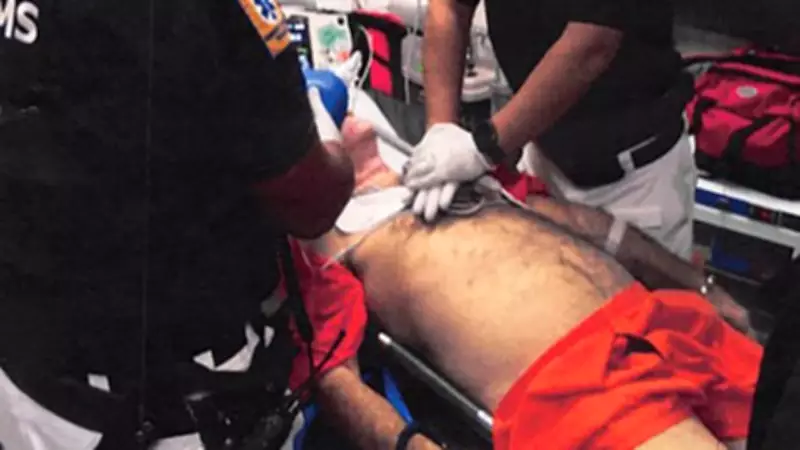
Between midnight and 6:30 am on August 10, guards failed to complete required inmate counts and 30-minute wellness checks, with prosecutors later stating they were asleep for three hours. The guards were charged with falsifying records, but the charges were eventually dropped. At 6:33 am, guard Michael Thomas found Epstein unresponsive in his cell, hanging from a sheet in a near-seated position. Thomas reported, "Epstein hung himself," and the body was described as cold with no palpable pulse.
Autopsy and Official Ruling
Photographs taken soon after showed the cell in disarray, and by the time FBI agents arrived at 1:35 pm, Epstein's body had been removed. Former detective Herman Weisberg, after reviewing the images, commented that the scene appeared "staged a bit." Dr. Michael Baden, who observed the autopsy at the request of Epstein's brother, noted that neck injuries were more consistent with strangulation pressure than suicide, suggesting different materials were involved.
On August 17, New York's chief medical examiner ruled the death a suicide after reviewing evidence, including blurred surveillance footage. Then-Attorney General William Barr acknowledged "serious irregularities" at the jail and described the events as "a perfect storm of screw-ups."
The newly released files have once again focused attention on the final hours of Jeffrey Epstein's life, keeping alive persistent questions about how and why he died inside a federal detention center, with many calling for further investigation into the circumstances surrounding his death.