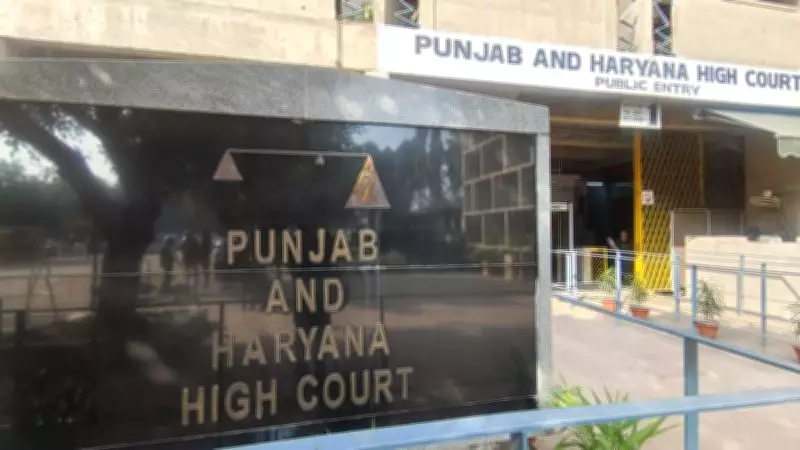
In a significant ruling on the scope of contempt jurisdiction and the protection available to court reporting, the Punjab and Haryana High Court has held that the publication of a fair and accurate report of a judgment pronounced in open court does not amount to contempt merely because the written order has not yet been signed.
Key Observations by the Division Bench
The Division Bench of Justice Jasgurpreet Singh Puri and Justice Amarjot Bhatti observed that once a judgment is formally pronounced in open court, it becomes a judgment in operation. Fair and accurate reporting of such proceedings enjoys statutory protection under Section 4 of the Contempt of Courts Act, 1971.
Background of the Case
The observations were made while dealing with a criminal contempt reference arising from the publication of news reports regarding an order transferring trials in two criminal cases from Faridkot to Chandigarh. The reference was made after a Single Judge noted that the order was dictated in court on April 9 but had not been signed when news reports appeared in The Tribune, the Hindustan Times, and the Times of India the following day.

The Single Judge had recorded a prima facie view that an attempt appeared to have been made to overreach the court and interfere with the administration of justice, directing that the matter be treated as a criminal contempt petition against the editors-in-chief, editors, and reporters concerned.
Court's Analysis
Examining the issue, the Division Bench found that the publications correctly reflected the substance of the order. The court noted that the petitions in question sought transfer of trial proceedings from the Sessions Court at Faridkot to a court of competent jurisdiction at Chandigarh. A perusal of the common order showed that both cases had been transferred from Faridkot to Chandigarh.
The Bench observed: "In this way, the reporting made in the newspapers cannot be termed as incorrect because as per the reporting in the newspapers by way of publication, it has been so stated that the trial has been transferred from Faridkot to Chandigarh and a perusal of the aforesaid judgment would show that in fact it has been so transferred and therefore, we find no falsehood in the publication."
Statutory Protection Under Section 4
Referring to Section 4 of the Contempt of Courts Act, 1971, the Bench noted that the provision expressly protects fair and accurate reporting of judicial proceedings. Quoting the statutory protection, the Bench observed that a person "shall not be guilty of contempt of Court for publishing judicial proceeding if the same is fairly and accurately reported."
Having found the reporting to be factually correct, the court proceeded to consider the larger legal issue of whether publication of a judgment dictated in open court, but not yet signed, could amount to contempt.
Legal Effect of Pronouncement
The Division Bench turned to the legal effect of pronouncement of a judgment in open court. Referring to a plethora of Supreme Court precedents dating back to 1953, the Bench observed that the law consistently recognizes that a judgment formally pronounced in open court acquires operative effect.
The Bench held: "Considering the law laid down by the Supreme Court in the judgments to the effect that once there is a formal 'pronouncement' in open Court, it becomes a judgment in operation, we are therefore of the considered view that the action on the part of the aforesaid newspapers/Editors-in-Chief/Editors/Reporters cannot be termed as criminal contempt."
Finding no case of criminal contempt made out, the Division Bench dismissed the proceedings and disposed of all pending applications.