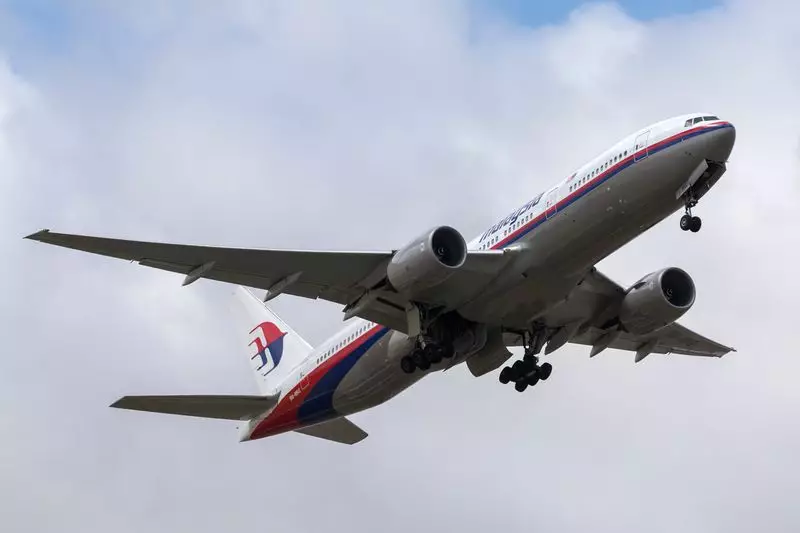
A new chapter in one of aviation's greatest mysteries has officially opened. A decade after Malaysia Airlines Flight MH370 vanished without a trace, a fresh deep-sea search operation has commenced, spearheaded by a private American marine robotics company. This latest mission rekindles hopes of finally locating the aircraft and providing closure to the families of the 239 people on board.
Ocean Infinity's 'No Find, No Fee' Mission
The ambitious new search is being conducted by Texas-based Ocean Infinity, which has deployed its advanced vessel, the Seabed Constructor. In a significant arrangement, the company is operating on a 'no find, no fee' basis, meaning it will only receive payment if it successfully locates the wreckage. This approach was agreed upon with the Malaysian government following extensive negotiations.
Ocean Infinity is no stranger to this search. The company previously scoured a vast area of the southern Indian Ocean in 2018, but that mission concluded without success. This new campaign, however, is targeting a different zone based on a re-analysis of all available data. The company is utilizing a fleet of autonomous underwater vehicles (AUVs) equipped with state-of-the-art sonar, cameras, and sensors to scan the seabed at extreme depths.

A Decade of Uncertainty and Grief
Flight MH370, a Boeing 777, disappeared on March 8, 2014, during a scheduled flight from Kuala Lumpur to Beijing. The last contact with air traffic control was less than an hour after takeoff. Despite one of the most extensive and costly multinational searches in history, the main wreckage has never been found. Only a few confirmed pieces of debris have washed ashore on Indian Ocean coastlines years later.
The disappearance has left the families of the passengers and crew in a state of prolonged anguish. For ten years, they have campaigned tirelessly for answers, urging authorities to continue the search. The launch of this new private mission is a direct result of their persistent advocacy and the Malaysian government's willingness to explore new avenues.
The Technical Challenge and Renewed Hope
The search area in the southern Indian Ocean is notoriously challenging. The seabed there is characterized by deep trenches, underwater volcanoes, and rugged terrain, making sonar mapping exceptionally difficult. Previous official searches, led by Australia, covered over 120,000 square kilometers but were ultimately suspended in 2017.
This latest effort by Ocean Infinity brings renewed technological hope. The company's AUVs can operate efficiently at depths exceeding 6,000 meters and are designed to cover large areas with high-resolution mapping capabilities. The mission's success hinges on the accuracy of the new data analysis that pinpointed the current search zone.
While the primary goal is to locate the aircraft, the implications of a successful find are profound. It could provide critical data to help determine the cause of the disappearance, which remains shrouded in theory and speculation. More importantly, it would offer a definitive answer to the grieving families who have waited for a resolution for a painful decade.
The world watches as this new search gets underway, holding onto the slim hope that modern technology and unwavering determination might finally solve the enduring puzzle of Malaysia Airlines Flight MH370.