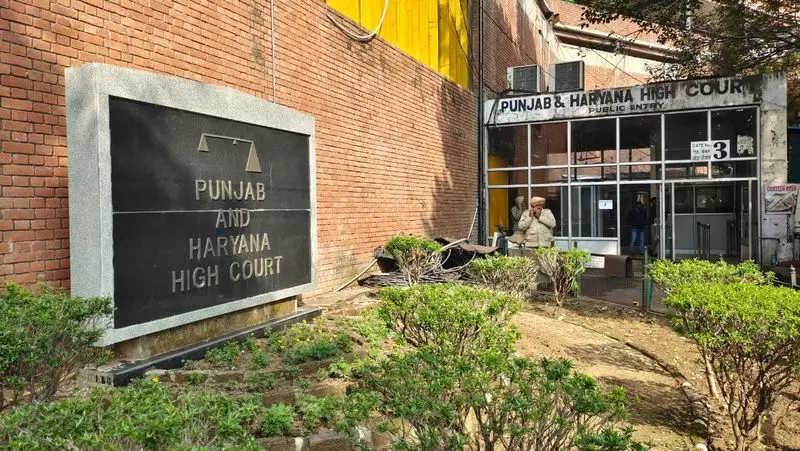
In a significant ruling emphasizing the principles of justice and good governance, the Punjab and Haryana High Court has directed the Haryana government to regularise the services of workers who have been employed on a daily wage or contractual basis for over a decade. The court invoked the concept of 'Rajdharma'—the duty of the state—to underscore the need for fairness towards long-serving employees.
The Court's Directive on Fairness and Rajdharma
The bench, comprising Justice Sandeep Moudgil, delivered this landmark judgment while hearing a batch of petitions filed by workers from various departments. These individuals had been working in roles such as pump operators, fitters, clerks, and other positions for periods ranging from 10 to a staggering 23 years, yet remained without permanent status or its associated benefits.
The court firmly rejected the government's argument that there was no sanctioned post for regularising these employees. It held that the state cannot exploit workers for such prolonged periods and then deny them job security. The judgment explicitly stated that 'Rajdharma' demands fairness and that the state must act as a model employer. The bench pointed out the inherent injustice in keeping individuals in temporary roles for decades, which deprives them of financial stability and dignity.

Details of the Case and Government's Stand
The petitioners, represented by advocates including Karanjit Singh, detailed their long tenures in departments like Public Health Engineering and others. Despite their extensive service, they were continued on a daily-wage basis, often without the minimum wages prescribed for such work.
The Haryana government's counsel opposed the pleas, contending that regularisation could not be ordered merely based on length of service, especially in the absence of sanctioned posts. They cited legal precedents to support their stance. However, the High Court found this position untenable given the extraordinary circumstances of the case—where individuals had devoted a major portion of their working lives to state service.
The court noted that some workers had been engaged since as early as 1999 or 2001, making their temporary status for over 20 years wholly unreasonable. It emphasized that the power to create posts rests with the government, and it should exercise this power to do justice to those who have served loyally.
Implications and Next Steps
The order mandates the Haryana state to complete the regularisation process for all eligible workers within a period of four months. This decision is expected to impact a large number of employees across various state departments, providing them with job security, proper pay scales, pensions, and other benefits that permanent government servants receive.
This ruling reinforces the judiciary's role in protecting the rights of vulnerable workers against arbitrary state action. It sets a powerful precedent that lengthy service itself creates a legitimate expectation of permanence, and the state cannot hide behind administrative technicalities to deny this right.
The judgment concludes by directing the government to consider the cases sympathetically and in accordance with the spirit of 'Rajdharma'. It marks a victory for thousands of workers and serves as a reminder to all state administrations of their fundamental duty to act justly and as a responsible employer.