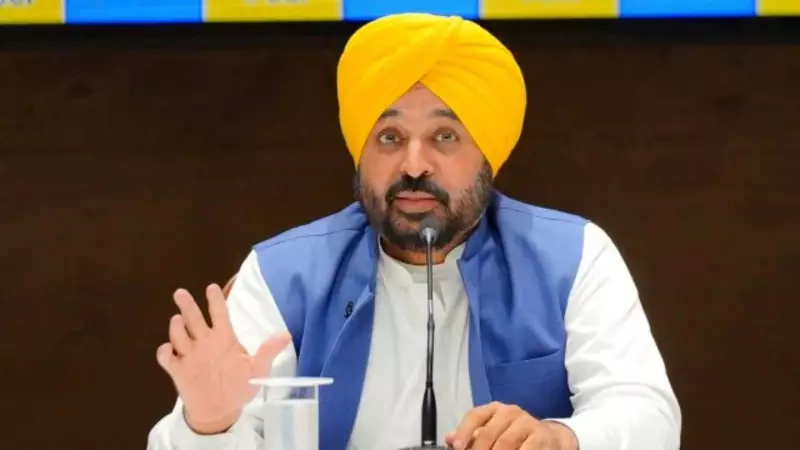
In a significant legal development, the Punjab and Haryana High Court has quashed a five-year-old case of rioting and unlawful assembly against Punjab Chief Minister Bhagwant Mann. The court found that the charges, stemming from a 2020 protest, lacked even a basic prima facie case against the Aam Aadmi Party (AAP) leader and his associates.
Court's Verdict and Key Observations
Justice Tribhuvan Dahiya, presiding over the case, delivered the ruling, stating that "ingredients of none of the offences alleged can be said to have been made out against any of the petitioners even prima facie." The court's order led to the quashing of the First Information Report (FIR), the subsequent chargesheet, and all legal proceedings linked to the case.
The bench critically examined the evidence presented by the Chandigarh Police. It noted a conspicuous absence of material specifically linking CM Mann and other AAP workers to the alleged acts of violence or obstruction. The judgment highlighted that the chargesheet failed to establish their direct involvement in assaulting police personnel or instigating a mob.
Background of the 2020 Protest and Charges
The case originated from events on January 10, 2020. Bhagwant Mann, then an MP and now Chief Minister, along with seven party MLAs, was leading a demonstration near the MLA hostel in Chandigarh's Sector 4. The protest was against a hike in power tariffs.
Chandigarh Police, from Sector 3 police station, registered a case invoking serious sections of the Indian Penal Code (IPC). The charges included:
- Section 147 (Punishment for rioting)
- Section 149 (Every member of unlawful assembly guilty of offence committed in prosecution of common object)
- Section 332 (Voluntarily causing hurt to deter public servant from his duty)
- Section 353 (Assault or criminal force to deter public servant from discharge of his duty)
The police alleged that the protestors assaulted officers, obstructed them from performing their duties, and caused injuries.
Arguments Presented in Court
Senior Advocate Anmol Rattan Sidhu, representing CM Mann, mounted a robust defence. A key argument was that no prohibitory orders under Section 144 of the CrPC were in force at the location and time of the protest. Therefore, the police had no legal basis to prevent a peaceful demonstration or march. Sidhu also contended that the essential elements required to prove offences under Sections 332 and 353 of the IPC were completely absent.
On the other side, the state's counsel, including advocates Manish Bansal and Viren Sibal, argued that police officials were indeed assaulted and injured by the mob, which they claimed was instigated by the accused to obstruct law enforcement.
Why the Court Rejected the Police Case
The court's findings systematically dismantled the prosecution's narrative. It observed that since Section 144 was not imposed, there was no valid reason for the police to stop protestors from marching towards the Chief Minister's residence.
Regarding the injuries to police officers, the court noted, "The nature of injuries suffered by the officials also dispels any role of the petitioners, as the same appear to be a result of grappling and pushing." It clarified that the petitioners were not specifically accused of causing these injuries.
Furthermore, the judgment pointed out that the investigating agency failed to provide any evidence connecting Mann or others to alleged stone-throwing. Interestingly, the court suggested that the police action of shooting water at the crowd might have been the trigger for the escalation.
Senior Advocate Sidhu, speaking after the verdict, explained a crucial legal technicality. He stated that for such aggravated offences against public servants, only a complaint case under Section 195(1)(b) of the CrPC is maintainable, not a regular FIR, which the police had incorrectly filed.
This ruling brings a conclusive end to a long-pending legal issue for the Punjab Chief Minister, reinforcing the legal principle that charges must be backed by concrete evidence and proper procedure, even against high-profile individuals.