Bombay High Court Directs Government Response on Unprecedented Adult Adoption Case
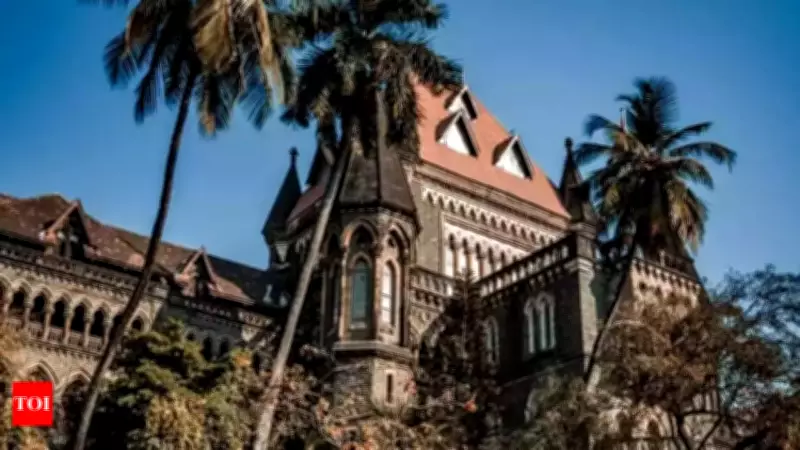
The Bombay High Court issued a significant directive on Tuesday, ordering both the Central government and the Maharashtra state government to formally respond to a groundbreaking petition filed by 90-year-old retired professor and gynecologist Bomsi Wadia. Dr. Wadia is seeking legal permission to adopt his 43-year-old caretaker, Rajeev Jha, as his son, a move that challenges India's current child-centric adoption framework.
Petitioner's Personal Circumstances and Legal Argument
Dr. Bomsi Wadia, a resident of Mumbai's Opera House neighborhood and owner of substantial assets including a bungalow, multiple plots of land, and a BMW vehicle, presented his case through advocate Suresh Mane. The petition emphasizes that Wadia, described as a "well-known medical practitioner" who remains physically and mentally fit, has never married and has no children of his own.
His only sister has passed away, leaving behind two daughters and a son, but Wadia has been living independently. Since 1999, Rajeev Jha, identified as "a person belonging to Hindu faith," has resided with Wadia and provided consistent care and companionship.

"Now at the fag end of his life, in order to carry forward his name and fame, he would like to adopt an adult person as his own son," the petition stated, highlighting the emotional and practical motivations behind the request. The legal filing argues that existing adoption laws in India are exclusively designed for children and fail to accommodate situations involving adult adoption, even when there is a long-standing, genuine relationship between the parties.
Core Legal Challenge and Court Proceedings
The petition specifically requests the High Court to:
- Direct the registration of the adoption deed between Wadia and Jha
- Declare Wadia's "right to adopt an adult person of his choice having a long association with him"
This case represents a direct challenge to India's adoption legal framework, which currently recognizes adoption primarily under the Hindu Adoption and Maintenance Act, 1956, and the Juvenile Justice Act, 2015—both focused on child welfare. The court's decision to seek responses from both government levels indicates the potential national significance of this matter.
Broader Context: Mumbai's Real Estate Market Performance
While the adoption case unfolds in the legal sphere, Mumbai's real estate market demonstrates remarkable financial activity. According to recent data, premium collections by the Brihanmumbai Municipal Corporation (BMC) show strong performance, particularly in areas with favorable development conditions.
Gulam Zia, International Partner and Senior Executive Director at Knight Frank India, explained: "BMC’s strong premium collections are closely linked to the availability and utilization of additional Floor Space Index across key micro-markets. South Mumbai, where height restrictions are almost non-existent and higher FSI can be effectively deployed, allows developers to build taller towers and unlock greater value."
He added that this results in higher premium payments, especially as these are linked to elevated Ready Reckoner rates in prime areas. In contrast, markets constrained by aviation norms or height restrictions see relatively lower premium flows due to limited development potential.
Geographic Distribution of Real Estate Revenue
The financial data reveals distinct geographic patterns in Mumbai's development revenue:

- The Bandra-Jogeshwari belt generated the largest revenue from developers at Rs 2,451 crore
- South and Central Mumbai (Colaba to Byculla) followed closely with Rs 2,392 crore
- The stretch between Goregaon and Dahisar recorded collections of Rs 1,811 crore
- Among municipal wards, K-West (Andheri West) contributed the largest share in Greater Mumbai at Rs 301 crore
According to data from Liases Foras, developer sales in Greater Mumbai reached Rs 1.3 lakh crore in 2025, representing an 8% growth over 2024 figures. Pankaj Kapoor, Managing Director of Liases Foras, noted: "Data indicates that the realty market continues to maintain strong momentum, supported by healthy sales and increased development approvals, even as completion activity shows signs of moderation."
The Bombay High Court's consideration of Dr. Wadia's petition occurs against this backdrop of Mumbai's dynamic economic landscape, highlighting how personal legal matters and broader urban development trends coexist in India's financial capital.