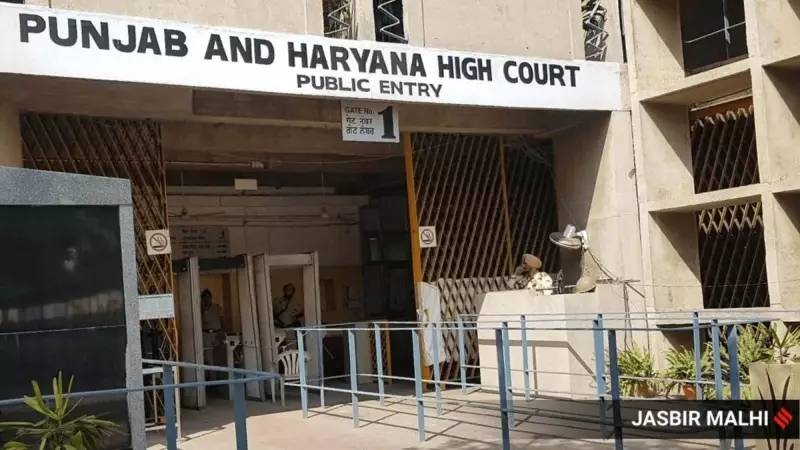
Punjab and Haryana High Court Sets Three-Week Deadline for BBMB Solar Project Tree-Felling Decision
The Punjab and Haryana High Court has issued a significant directive to the Punjab government, ordering it to decide within three weeks on an application by the Bhakra Beas Management Board (BBMB) seeking permission to fell over 4,000 trees for an 18 MW solar power project. Simultaneously, the court has allowed the National Highways Authority of India (NHAI) to proceed with its highway projects, provided they strictly comply with afforestation norms, thereby modifying a previous blanket ban on tree felling across Punjab.
Court's Interim Order and BBMB's Pending Application
A Division Bench comprising Chief Justice Sheel Nagu and Justice Sanjiv Berry was hearing multiple applications stemming from its interim order dated December 24, 2025, which had imposed a complete ban on tree felling throughout Punjab. This ban prompted several agencies, including NHAI, BBMB, and the Punjab Government, to seek relaxations or modifications.
During the proceedings, the court noted that BBMB had submitted its application on August 18, 2025, requesting permission to cut approximately 4,056 trees to establish an 18 MW solar power plant on its land. However, the application had remained pending with the authorities for months without a decision.
Following assurances from Punjab Advocate General M S Bedi that the matter would be expedited, the court directed the competent authority to decide on BBMB's application within three weeks by issuing a speaking order. The bench emphasized that this decision should not be influenced by the interim ban or the pending main petition. It clarified that if statutory permissions are not granted, BBMB would face legal consequences.
NHAI Highway Projects and Afforestation Compliance
The bench also addressed applications filed by NHAI seeking modification of the blanket ban to allow the continuation of highway projects. NHAI presented detailed submissions, highlighting that it had obtained all necessary statutory approvals, including Stage II forest clearances from both the central and state governments in September 2025. Additionally, compensatory afforestation plans were already in place.
NHAI informed the court that one of the projects, a highway stretch along the international border in Punjab, is nearly 75% complete and holds national and strategic importance, facilitating defence and troop movement across a border belt of approximately 100 kilometres. The authority stated that forest land along the highway had been notified as a protected forest for compensatory plantation, and funds for afforestation had been deposited.
Petitioners' Concerns and Court's Observations
Opposing any relaxation, the petitioners argued that despite permissions being granted, there was no clarity on timelines for compensatory afforestation. They contended that even after identifying land months earlier, no substantial plantation work had commenced, despite one monsoon season passing. The petitioners urged the court to ensure that development and afforestation progress simultaneously, adhering to principles of sustainable development.
The bench questioned why applications for tree felling had remained undecided for months and observed that agencies could not postpone compensatory plantation until after development works were completed. It indicated that monitoring mechanisms and timelines for afforestation would need to be addressed while considering modifications to the December 24, 2025, order.
Court's Decision on NHAI Projects
Regarding NHAI's applications, the bench noted that Stage II approvals granted by the Union Ministry of Environment, Forest and Climate Change and the Punjab Government in September 2025 had been placed on record, along with documents related to compensatory afforestation. The court acknowledged that the project along the international border is of national importance and nearing completion.
Taking into account the statutory permissions already granted and the notification declaring the plantation along the highway as a protected forest, the bench ruled that the blanket ban imposed on December 24 could not obstruct projects where all approvals were in place. Consequently, it modified its earlier order to permit NHAI to proceed with its work, subject to compliance with all conditions attached to the forest clearances, including compensatory afforestation.
Compensatory Afforestation Ratios Discussed
During the hearing, Punjab Advocate General Bedi informed the court that state policy mandates compensatory afforestation at a minimum ratio of five trees for every tree felled. In response, Chief Justice Sheel Nagu suggested that a higher number, such as ten, would be preferable. The bench repeatedly emphasized that, given the scale of tree felling and environmental concerns, a tenfold norm was desirable. However, it stopped short of formally mandating this ratio while allowing NHAI's projects to proceed, provided they comply with forest clearance conditions.
This ruling underscores the judiciary's balanced approach, prioritizing both developmental projects of national significance and environmental conservation through stringent afforestation requirements.