

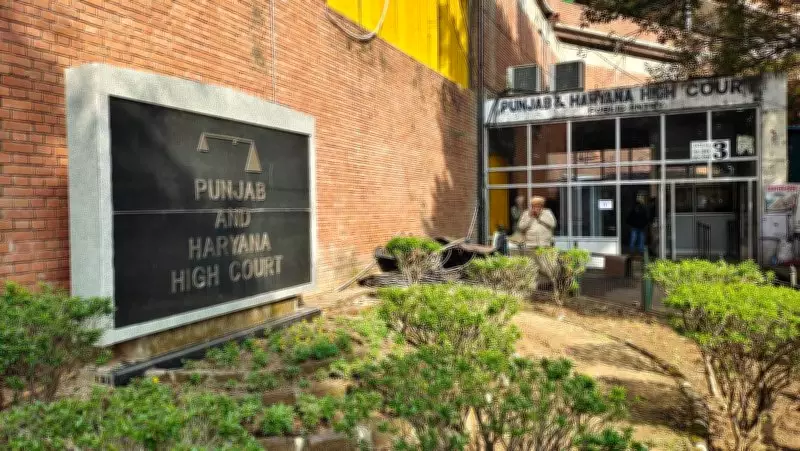
The Punjab and Haryana High Court has affirmed the liability of the Union of India to compensate the families of victims who died in a bomb explosion on the 24-Down Janta Express in February 1992. The blast, which occurred between Tohana and Jind, killed five passengers and injured several others. Justice Pankaj Jain, presiding over the bench, ruled that the incident fell within the definition of an 'accident' under the Railways Act, thereby rejecting the appeals filed by the Union of India.
Background of the Case
The case originates from a tragic event in February 1992 when a bomb exploded aboard the 24-Down Janta Express while it was traveling from Tohana to Jind. The explosion claimed five lives and left multiple passengers injured. An FIR was registered under the Explosive Act, TADA, IPC, and the Indian Railways Act. The appeals stemmed from compensation claims filed by the families of two individuals who were among those killed in the explosion.
Legal Arguments and Tribunal's Decision
The Union of India argued that the bomb blast did not constitute an 'untoward incident' under the Railways Act, and thus, the Railways should not be held liable for compensation. However, the tribunal concerned awarded compensation, holding that the bomb blast fell within the ambit of 'accident' under Section 124 of the Railways Act. The High Court concurred, noting that the tribunal had rightly relied upon the Accident Manual issued by Northern Railway Administration.

High Court's Observations
Justice Jain asserted that the Union of India could not escape its liability to pay compensation following deaths arising out of a bomb blast in a train or railway station, once it has been held that fire or explosion in the train falls within the definition of 'accident.' The court emphasized that the arguments raised by the counsel for the appellant-UOI were without merit and could not be accepted.
Reliance on Supreme Court Precedent
The High Court also relied upon the Supreme Court's decision in the case of Union of India and Others v. Sunil Kumar Ghosh, wherein the apex court observed that events such as the 'blowing up of a train' are covered under the definition of 'accident.' Consequently, Justice Jain stated, 'This Court finds no reason to interfere in the findings recorded by the Tribunal to hold that the Administration is liable to pay compensation on account of death of the passengers caused on account of bomb blast in the moving train.'
Modification of Compensation Award
On cross-objections filed by the claimants, the High Court modified the compensation award. The court held that the claimants would be entitled to compensation applicable on the date of the accident, together with interest at the rate of 9 per cent per annum from the date of filing of the claim petitions until actual realisation. This modification ensures that the families receive a fair amount adjusted for the passage of time.
Implications of the Ruling
This ruling sets a significant precedent, affirming that bomb blasts in moving trains are considered accidents under the Railways Act, thereby making the Railways liable for compensation. It underscores the principle that the Railways cannot evade responsibility for such tragic events, providing justice to the families who have waited nearly 34 years for a resolution. The decision also reinforces the importance of the Accident Manual and Supreme Court precedents in interpreting the scope of the Railways Act.






