

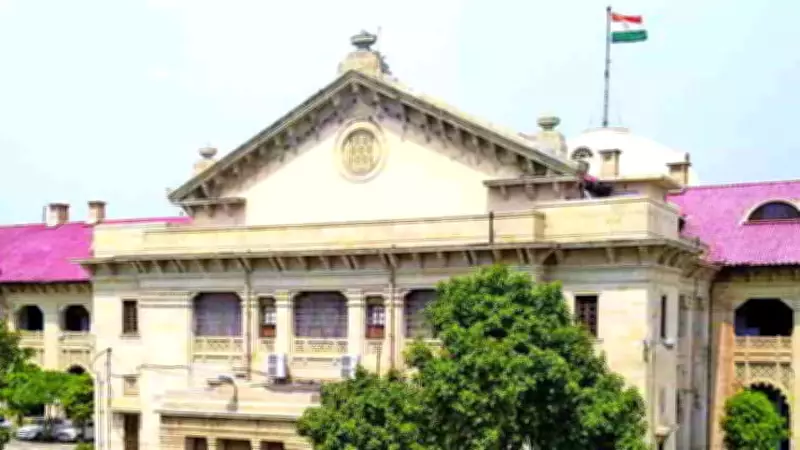
Allahabad High Court Orders Immediate Release in Maintenance Default Case
The Allahabad High Court has issued a significant order for the immediate release of a man who was sentenced to 22 months in civil prison by the family court in Jhansi. The incarceration was due to his failure to pay maintenance to his wife, sparking a legal debate on the limits of such penalties.
Details of the Case and Court's Directive
The man, identified as Tahir alias Babloo, has been lodged in jail since December 3, 2025. In an order passed on April 2, Justice Praveen Kumar Giri granted him relief, stating there was no requirement for Tahir to furnish a bail bond or sureties. This decision was based on the fact that he was confined in a civil prison, a facility distinct from criminal incarceration.
A civil prison is a specialized detention center where individuals are held for civil matters rather than criminal offenses. Common reasons for detention include non-payment of maintenance or debts. Unlike criminal prisoners, civil prisoners often enjoy certain privileges, such as wearing their own clothing and retaining personal items, and they are typically segregated from those convicted of crimes.

The court directed the registrar (compliance) to communicate this order to the jail authorities to ensure Tahir's prompt release. This move highlights the judiciary's focus on procedural fairness in civil imprisonment cases.
Background and Legal Arguments
The case originated when Tahir's wife filed an application seeking recovery of Rs 2,64,000 for unpaid maintenance covering 22 months from November 2023 to September 2025. Following this, Tahir was arrested by the police and presented before the court. During proceedings, he expressed inability to pay the amount, citing poor financial conditions, and requested the minimum possible sentence.
However, the family court imposed a 22-month prison term—one month for each month of default. Tahir challenged this ruling in the high court, with his counsel making key legal submissions.
The counsel argued that under Section 125(3) of the Criminal Procedure Code (CrPC), if a person fails to make maintenance payments without sufficient cause, the court may send him to civil prison for only one month. It was further contended that for any remaining unpaid amount after the execution of an arrest warrant, the proper legal recourse is the attachment of property for recovery, not an extended jail term beyond one month.
Court's Decision and Future Proceedings
After hearing these submissions, Justice Giri issued notices to Tahir's wife and ordered his immediate release. The court's decision underscores a critical interpretation of civil imprisonment limits, potentially setting a precedent for similar cases.
The matter has been listed for further hearing on May 18, where additional arguments and evidence may be presented. This ongoing legal process will continue to explore the balance between enforcing maintenance obligations and protecting individuals from excessive penalties.
This case brings to light important aspects of civil law enforcement and the rights of those detained for financial defaults, emphasizing the need for judicial oversight in such matters.






