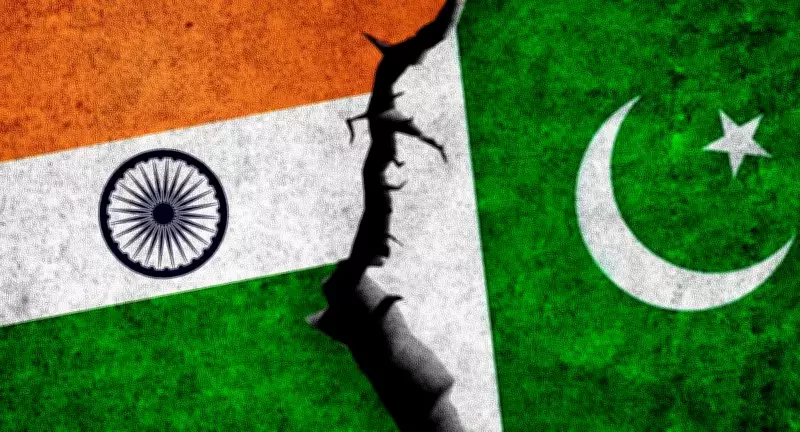
The Indus Waters Treaty (IWT), signed on 19 September 1960 and effective from 1 April 1960, allocates the Eastern Rivers (Ravi, Beas, Sutlej) to India and the Western Rivers (Indus, Jhelum, Chenab) to Pakistan, subject to specified exceptions. The Treaty comprises 79 paragraphs under 12 Articles, supplemented by eight annexures. W.A.B. Iliff signed on behalf of the World Bank, which is a party only for purposes specified in Articles V and X and Annexures F, G and H.
Historical Background and Negotiations
The partition of India in August 1947 triggered the Indus waters dispute, leading to the Inter-Dominion Agreement of 4 May 1948 (the Delhi Agreement). This first regulation stated that 'proprietary rights' did not allow West Punjab to claim any share of East Punjab waters as a right. Pakistan denounced it on 23 August 1950. In early 1951, David Lilienthal, former chairman of the Tennessee Valley Authority, proposed joint development of the Indus Basin system with World Bank good offices. World Bank President Eugene Black wrote to the two Prime Ministers on 6 September 1951, proposing a Working Party of Indian, Pakistani, and World Bank engineers. Negotiations experienced extreme ups and downs but the World Bank's resoluteness kept them buoyant until the Treaty was signed in 1960.
Dispute Settlement Mechanism
Under Article IX, the Treaty distinguishes between a 'question', a 'difference', and a 'dispute'. The Permanent Indus Commission, comprised of representatives of both countries, first examines any question. If no agreement is reached, a difference arises, to be dealt with by a Neutral Expert. A dispute arises only if the difference falls outside Paragraph 2(a) of Article IX, or if the Neutral Expert so informs the Commission. The Commission must agree to deem any difference a dispute; there is no unilateral provision. A court of arbitration may be established only by agreement, or on failure of negotiations or mediation.

Prerequisites for Arbitration
Annexure G states: 'If the necessity arises to establish a Court of Arbitration under the provisions of Article IX, the provisions of this Annexure shall apply.' The phrase 'If the necessity arises' signifies fulfilment of prerequisites; not any question can be referred unilaterally. A dispute arises only where both Commissioners agree, or the Neutral Expert informs the Commission. Only after negotiation and mediation are exhausted may arbitration arise.
Effect of Unilateral Initiation
If a dispute has not arisen according to the Treaty, unilateral initiation of arbitration could amount to a violation, hence illegal. The Vienna Convention on the Law of Treaties, 1969, though not binding on India or Pakistan and post-dating the IWT, reflects customary international law. Article 60 defines a 'material breach' as violating a provision essential to the treaty's object or purpose. Pakistan's unilateral move to establish a court of arbitration without a dispute having arisen bypasses essential procedural safeguards, potentially constituting a material breach.
Conclusion
The IWT is a unique bilateral instrument premised on 'goodwill and friendship'. Its dispute settlement mechanism requires cooperative resolution, avoiding third-party involvement. Unilateral arbitration contradicts the core intent. Additionally, Pakistan's continuous cross-border terrorism could be attributed to failure to perform obligations under the Treaty, constituting a material breach. Under customary international law, India is entitled to hold the Treaty in abeyance.