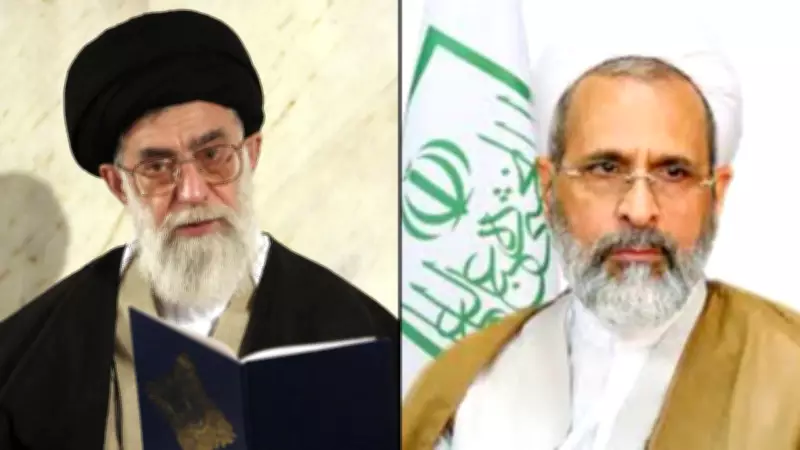
IDF Confirms Killing of Iran's Supreme Leader in Major Tehran Airstrike
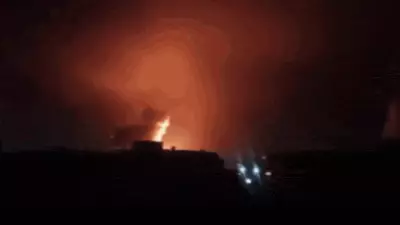
The Israeli Defence Forces (IDF) has officially confirmed the death of Iran's Supreme Leader Ayatollah Ali Khamenei in a large-scale, precise airstrike targeting his leadership compound in Tehran. This military action effectively ends Khamenei's decades-long rule over the Islamic Republic, marking a significant escalation in regional hostilities.
In their statement, the IDF described Khamenei as "the principal architect of anti-Israel operations and regional militancy," justifying the strike as a defensive measure against ongoing threats. The attack represents one of the most direct and consequential military confrontations between Israel and Iran in recent history.
Iran Acknowledges Death and Announces Interim Leadership
Following the joint US-Israeli strikes, Iranian authorities formally acknowledged Khamenei's death. The Iranian government has moved swiftly to establish transitional governance, appointing Ayatollah Alireza Arafi as the interim Supreme Leader.

Ayatollah Arafi, a senior cleric and longstanding member of Iran's powerful Guardian Council, brings extensive experience within the country's religious and political institutions. His appointment is designed to ensure continuity and stability during this period of intense uncertainty and potential internal disruption.
The transition plan involves coordination between Iran's president, judiciary chief, and a jurist from the Guardian Council. However, specific details regarding the formal succession process and long-term leadership remain unclear, creating a power vacuum that could influence Iran's domestic and foreign policy directions.
Regional Retaliation and Global Fallout
In response to Khamenei's death, Iran launched Operation 'Truthful Promise 4,' a series of retaliatory missile attacks targeting US military bases across the Middle East and Israeli assets. Initial reports indicate strikes on the US navy headquarters in Bahrain, with explosions also reported in Abu Dhabi and Doha.
The geopolitical shockwaves extended beyond direct military engagement. In Karachi, Pakistan, a violent mob stormed the US consulate, resulting in at least nine protester fatalities and thirty-six injuries. Pakistani police used significant force to disperse the crowds as unrest spread through the city following Iran's confirmation of Khamenei's death.
Iran has declared a period of national mourning and vowed further revenge, while former US President Donald Trump issued warnings against additional escalation from Tehran. The situation has created a highly volatile security environment across the Middle East and South Asia.
Unrelated Violence in Aligarh Amid National Tensions
Separately, in Aligarh, India, a shooting incident near Shri Varshney Mahavidyalaya college left one dead and one injured. The violence occurred after a Holi Milan function, with two motorcycle-borne assailants opening fire on a 28-year-old factory worker and a 25-year-old BA student.
Local police have registered cases of murder and attempted murder against the accused. Preliminary investigations suggest the attack stemmed from a ragging-related dispute and prior personal rivalry, as all parties involved were reportedly acquainted with each other.
Cricket Prediction Adds Cultural Context
Amid these serious geopolitical developments, Indian astrologer Greenstone Lobo made a sporting prediction regarding the crucial Super 8 cricket clash between India and West Indies. Lobo forecast an Indian victory at Eden Gardens, citing favourable planetary alignments despite concerns about India's net run rate and the knockout stakes of the match.
The astrologer suggested potential squad changes, including the inclusion of Sanju Samson, could enhance India's chances in this high-pressure encounter. This prediction provides a contrasting narrative of cultural interest alongside the dominant news of international conflict.

The convergence of these events—from targeted assassinations and regional warfare to local violence and cultural commentary—paints a complex picture of global instability intersecting with regional and personal conflicts. The death of Ayatollah Khamenei represents not merely a change in Iranian leadership but a potential turning point in Middle Eastern geopolitics with worldwide implications.