Karnataka High Court Verdict Ends Bike-Taxi Ban, Easing Tensions Across State
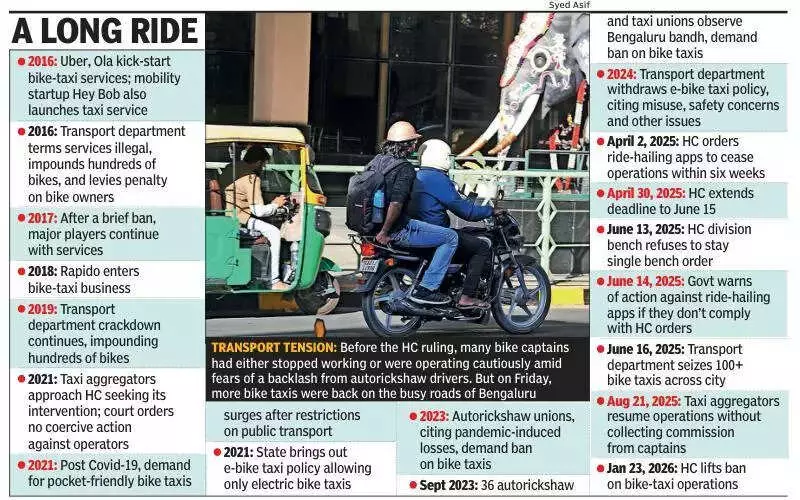
In a landmark decision that has been celebrated across Karnataka, the High Court has officially lifted the ban on bike-taxi operations, providing much-needed relief to thousands of captains who had been operating under constant fear and uncertainty. This ruling marks a significant turning point for the urban mobility sector in the state, particularly in congested cities like Bengaluru where bike taxis have become an essential mode of transport.
Daily Struggles and Newfound Freedom for Bike-Taxi Captains
For Deepa P, a dedicated bike-taxi captain in Bengaluru, the court's decision has eliminated a daily source of anxiety that had plagued her work routine. Until now, she meticulously avoided picking up or dropping passengers near auto stands or areas dominated by autorickshaw drivers, who frequently objected to bike-taxi services encroaching on their territory. "I'm very happy," Deepa expressed with visible relief, emphasizing that this order would benefit thousands of riders just like her who depend on this income for their livelihoods.
Deepa works diligently from 9 AM to 6 PM each day, earning approximately Rs 1,000 daily, which is crucial for supporting her family. Her story reflects the broader narrative of many bike-taxi captains across Karnataka who have faced similar challenges and restrictions in their daily operations.
Celebrations and Long-Awaited Victory for Rider Associations
The High Court verdict sparked immediate celebrations among office-bearers of the Bike Taxi Welfare Association in Bengaluru, who marked this historic occasion with traditional festivities including bursting firecrackers, cutting a celebratory cake, and distributing sweets to members and supporters. This jubilant response underscores the emotional and practical significance of the court's decision for the riding community.
Association president Adinarayana M described the ruling as "the culmination of a long struggle" that has spanned nearly a decade. According to his estimates, this order will benefit close to six lakh bike-taxi riders across Karnataka, with approximately two lakh operating in Bengaluru alone. Adinarayana emphasized that bike-taxi services have evolved into a crucial source of employment, particularly for young people seeking flexible earning opportunities in urban centers.
Restored Confidence and Return to Work
Sajan Ahmed, another experienced bike-taxi captain, shared how the court order has restored his confidence to return to work after a forced hiatus. Despite relying on bike-taxi income for the past five years to support himself, Sajan had to stop riding four months ago after receiving repeated warnings and threats from autorickshaw drivers who viewed his service as competition.
"Today, I started again," Sajan announced with renewed optimism, explaining that the ruling means he no longer has to work in constant fear or deliberately avoid certain areas of the city. His experience highlights the tangible impact of legal recognition on individual livelihoods and psychological well-being.
Industry Leaders Welcome Progressive Mobility Decision
Major ride-hailing platforms offering bike-taxi services have unanimously welcomed the High Court's progressive decision. Uber released a statement acknowledging that the order recognizes bike taxis as both legal and vital mobility options in congested urban environments, bringing relief to lakhs of people who depend on these services for their daily commute and transportation needs.
Ola echoed similar sentiments, describing the decision as a positive signal for urban mobility throughout Karnataka. The company emphasized that bike taxis play a key role in improving last-mile connectivity and affordability while simultaneously helping reduce traffic congestion in crowded cities. Furthermore, Ola highlighted how this ruling would create flexible earning opportunities for thousands of riders across the state.
A Rapido spokesperson expressed gratitude toward the High Court and all stakeholders who supported this journey, stating: "Recognizing bike taxis as a legitimate mode of transport is not just a legal victory for us, but a milestone moment for urban mobility in Karnataka. It is a win for the people of Karnataka."
Broader Implications for Urban Mobility and Employment
The Karnataka High Court's decision carries significant implications beyond immediate legal recognition. Industry experts suggest this ruling could:
- Establish clearer regulatory frameworks for emerging mobility solutions
- Encourage innovation in urban transportation systems
- Create sustainable employment opportunities for youth across the state
- Reduce traffic congestion through efficient last-mile connectivity options
- Provide affordable transportation alternatives for daily commuters
As bike-taxi services resume normal operations across Karnataka, stakeholders remain optimistic about the future of urban mobility in the state. The resolution of this long-standing conflict between bike-taxi operators and autorickshaw drivers represents a significant step toward creating a more inclusive and efficient transportation ecosystem that benefits all citizens.