

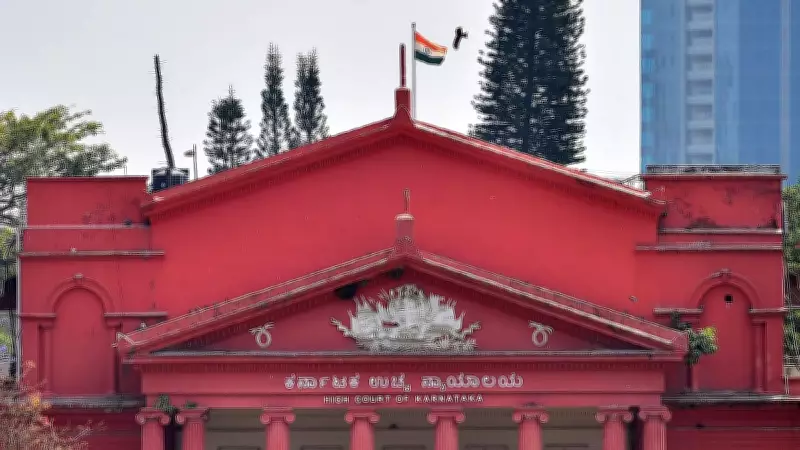
The Karnataka High Court has ruled that claimants seeking compensation under the Motor Vehicles Act, 1988, are not required to prove their employment beyond a reasonable doubt. The observation was made by a division bench comprising Justices Jayant Banerji and Tara Vitasta Ganju while hearing an appeal related to a road accident involving a Karnataka State Road Transport Corporation (KSRTC) bus.
Background of the Case
The appeal arose from a claim petition filed by the legal representatives of a deceased person who died in a collision with a KSRTC bus. The claimants sought compensation under the Motor Vehicles Act. The KSRTC contested the claim, arguing that the deceased’s employment status was not adequately proven, which affected the calculation of loss of dependency.
The tribunal had initially awarded compensation, but the KSRTC appealed, contending that the claimants failed to provide conclusive evidence of the deceased’s employment and income. The High Court, however, dismissed the appeal, emphasizing that the standard of proof in motor accident claims is different from criminal cases.

Court’s Rationale
Justice Banerji and Justice Ganju observed that the purpose of the Motor Vehicles Act is to provide swift and just compensation to victims of road accidents. Requiring strict proof of employment would defeat this objective. The bench stated, “The claimant is not required to prove the employment beyond all doubt. A preponderance of probability is sufficient to establish the employment and income of the deceased.”
The court noted that in many cases, victims of road accidents are daily wage workers or self-employed individuals who may not maintain formal employment records. Imposing a rigorous evidentiary burden would unfairly disadvantage such claimants. The bench added that the tribunal should adopt a pragmatic approach while assessing evidence related to employment and income.
Impact on Future Claims
The ruling is expected to ease the burden on claimants in motor accident cases across Karnataka. It clarifies that tribunals can rely on circumstantial evidence, such as testimonies of family members, neighbors, or employers, and other documents like school records or ration cards, to determine the deceased’s occupation and income.
Legal experts believe this judgment will help expedite compensation proceedings and reduce litigation. The court’s emphasis on a liberal approach aligns with the social welfare intent of the Motor Vehicles Act, which aims to protect victims and their families from financial hardship following accidents.
The case was heard in June 2026, with the judgment pronounced on June 22, 2026. The bench dismissed the KSRTC’s appeal, upholding the tribunal’s award. The court also directed the KSRTC to pay the compensation amount with interest as per the original order.






