

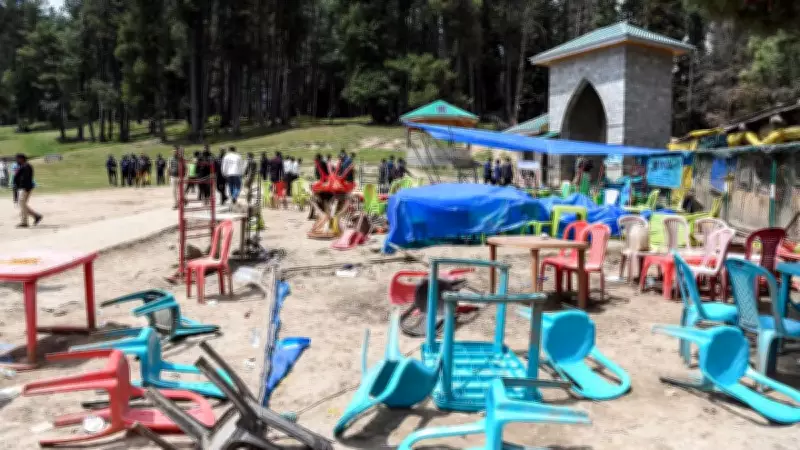
The National Investigation Agency’s chargesheet in the 2024 Pahalgam attack has laid bare critical intelligence failures and a sophisticated network that used drones to ferry weapons across the Line of Control, according to officials familiar with the document. The chargesheet, filed on June 22, 2026, names seven accused, including three Pakistani handlers, and runs over 3,000 pages.
Intelligence Gaps Exposed
The NIA investigation revealed that local intelligence agencies had received specific inputs about the movement of two Pakistani terrorists into the Kashmir Valley two weeks before the attack, but the information was not acted upon. “There was a clear failure in coordination between state and central agencies,” a senior NIA officer said, requesting anonymity. The chargesheet notes that a suspicious vehicle was spotted near the attack site three days prior but was not intercepted due to lack of follow-up.
Drone-Delivered Arms
A key finding in the chargesheet is the use of drones to supply assault rifles, grenades, and explosives to the attackers. The NIA traced the drone flights to locations in Pakistan-occupied Kashmir, with at least five missions delivering payloads between March and June 2024. “The drones flew at low altitudes, evading radar, and dropped packages at pre-designated points,” the chargesheet states. Recovered drone debris included Chinese-manufactured components, indicating a cross-border supply chain.

The attack, which occurred on June 9, 2024, killed two Indian Army soldiers and three civilians in Pahalgam, Jammu and Kashmir. The NIA chargesheet details how the assailants used these weapons to ambush a convoy, firing over 50 rounds in a five-minute assault. Ballistic evidence matched the recovered drone-dropped rifles.
Handlers and Funding
The chargesheet names three Pakistan-based handlers—identified as Abu Bakr, Khalid, and Rizwan—who coordinated the attack via encrypted messaging apps. They provided funds through hawala channels, with over ₹5 lakh transferred to a local overground worker. The NIA has attached properties worth ₹2 crore belonging to the accused under the Unlawful Activities Prevention Act.
Impact and Aftermath
The revelations have sparked a political debate, with opposition parties demanding a parliamentary inquiry into the intelligence lapses. “This chargesheet confirms what we suspected—that our intelligence apparatus failed the nation,” said a Congress spokesperson. The NIA has recommended a review of drone detection systems along the border, and the Ministry of Home Affairs has initiated a high-level committee to address the gaps.
The chargesheet also highlights the role of local youth recruited via social media, with one accused, a 22-year-old from Anantnag, admitting to receiving drone-dropped weapons. The NIA continues to investigate the broader network, with six more suspects detained.






