

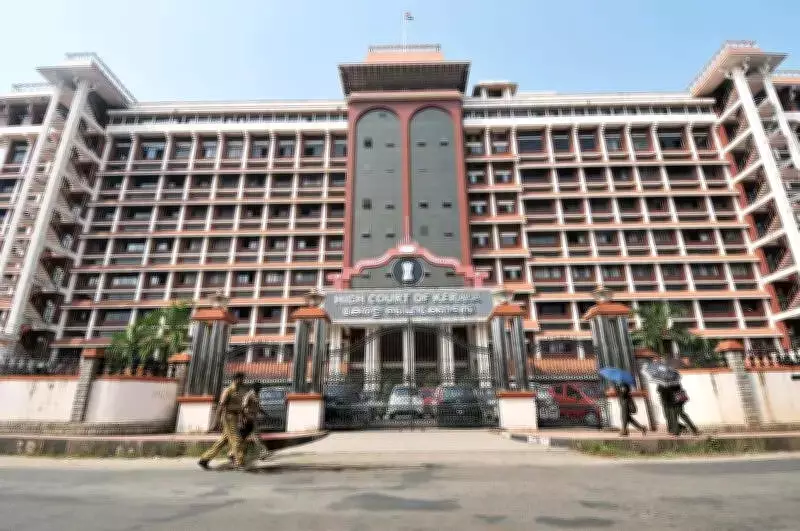
Kerala High Court Proposes Major Reforms for Sabarimala Pilgrim Management
The Kerala High Court has put forward a comprehensive set of suggestions to the Travancore Devaswom Board (TDB) and the state government aimed at significantly improving pilgrim management at the Sabarimala temple for the upcoming season. These directives were issued in a suo motu case initiated to address the persistent issue of overcrowding among devotees.
Expert Committee and Festival Office
The bench of Justices V Raja Vijayaraghavan and K V Jayakumar has mandated the constitution of a specialized Sabarimala infrastructure and crowd management expert committee. This committee is to comprise specialists from diverse fields including transport engineering, urban and regional planning, civil engineering, disaster and crowd science, environmental science, public health, and IT and data analytics, ensuring a multidisciplinary approach to problem-solving.
The government has been directed to place a panel of experts on or before April 8 for the constitution of this crucial committee. Additionally, the High Court has ordered the establishment of a new festival office at Pamba, which must be made fully functional from April 15. This office will serve as the venue for all board meetings related to Sabarimala, ensuring continuous monitoring and supervision of pilgrimage activities.

Budget and Administrative Measures
To streamline financial planning, the court has proposed the creation of a standalone Sabarimala festival budget within the overall TDB budget framework. Furthermore, it has suggested that comprehensive review meetings, chaired by the devaswom minister, be held both before and during the pilgrimage season to oversee implementation and address emerging challenges.
Upgraded Virtual Queue System
In a significant move to manage crowd flow, the High Court has recommended a major upgrade to the existing virtual queue system. The enhanced system is to feature real-time updates and cancellation options for devotees. A key proposal is the introduction of a nominal and refundable security deposit for each booking slot.
This deposit would be refunded upon the devotee's arrival within the allotted time window or adjusted against prasadam of equivalent value. However, if a devotee fails to arrive within the scheduled window, the amount may be forfeited. This measure is specifically designed to deter speculative bookings, slot-blocking, and last-minute crowd surges that have plagued the pilgrimage in the past.
Infrastructure and Capacity Enhancements
The court has stipulated that the queue complex from Marakoottam to Sannidhanam must have a minimum holding capacity of 24,000 pilgrims to accommodate peak crowds effectively. It has also proposed converting the existing Valiya Nadappanthal into a two-storied structure, with the first floor serving as a dedicated holding area for pilgrims awaiting darshan.
To further reduce congestion in the main queue, a separate queue complex at Malikappuram has been suggested for pilgrims without Irumudi and for those seeking second-time darshan. The court has also mandated that no permanent or temporary structures be permitted within 100 metres from the sanctum sanctorum, except those essential for ritualistic purposes.
Route Management and Pilgrim Comfort
For the traditional Kananapatha forest route from Erumeli, the High Court has recommended capping pilgrim flow at 5,000 per day to ensure safety and manageability. To enhance pilgrim comfort during the arduous trek, additional resting places must be established on the Appachimedu-Saramkuthi stretch, and a large number of stone benches or seats must be provided on both sides of the trek route.
For better communication and guidance, large LED display boards are to be installed at strategic locations including Marakoottam, Nilakkal, and the entry points of all queue complexes.
Technology-Driven Crowd Management
Embracing modern solutions, the court has suggested the implementation of an AI-based integrated command and control centre to facilitate effective inter-departmental coordination and scientific crowd management. It has further proposed the use of AI-based drones for real-time monitoring of crowd movements and densities across the pilgrimage site.

Additionally, the High Court has directed the TDB to implement RFID (Radio-Frequency Identification) technology to track pilgrim movement across key nodes. This system will enable real-time assessment of crowd density, waiting periods, and congestion points, allowing for dynamic decision-making and proactive management to ensure a smoother and safer pilgrimage experience for all devotees.





