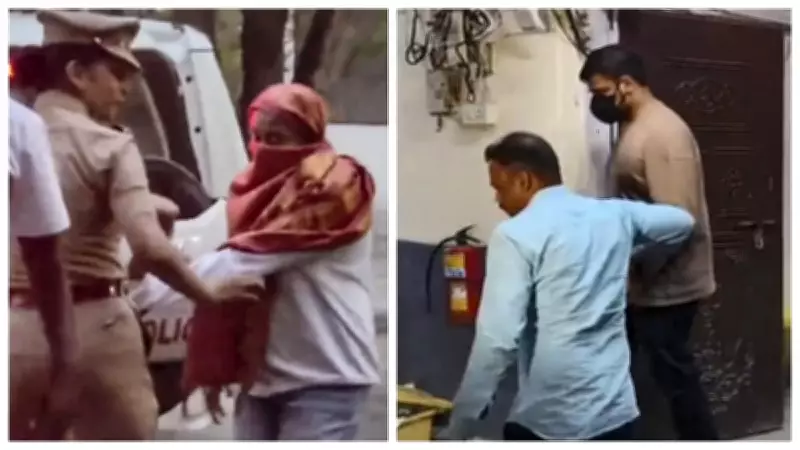
Pune police have decided to conduct lie-detector tests on Siya Goyal and Chetan Choudhary, the two accused in the murder of Ketan Agarwal, as they continue to shift blame on each other. The decision comes after inconsistencies in their statements during interrogation.
Background of the case
Ketan Agarwal, a 32-year-old software engineer, was found dead in his apartment in Pune's Hinjawadi area on June 25. Initial investigations revealed that he was strangled. Siya Goyal, a colleague, and Chetan Choudhary, a friend, were arrested on June 27 based on circumstantial evidence.
Accused blaming each other
According to police sources, both accused have been providing contradictory versions of events. Siya Goyal claims that Chetan Choudhary acted alone, while Choudhary alleges that Goyal was the mastermind. This prompted the investigating officer, Inspector Sunil Pawar, to seek permission for a lie-detector test from the court, which was granted on July 1.

Lie-detector test details
The test will be conducted at the Forensic Science Laboratory in Pune by a team of experts. Police said that the test is expected to help them ascertain the truth and fix the exact role of each accused. The test is scheduled for July 4.
“We have obtained all necessary permissions. The lie-detector test will be conducted in a controlled environment with the consent of the accused. This will help us corroborate the evidence we have gathered so far,” said Inspector Pawar.
Previous evidence
Police have recovered Agarwal's laptop and mobile phone, which are being analyzed. CCTV footage from the apartment complex showed both accused entering and leaving the building around the time of the murder. However, the lack of a clear motive has complicated the case.
Legal experts weigh in
Legal experts note that lie-detector test results are not admissible as direct evidence in court but can be used to aid investigation. “The test can provide leads and help in extracting confessions. However, the final evidence must be corroborated by other material,” said advocate Rohan Deshmukh.