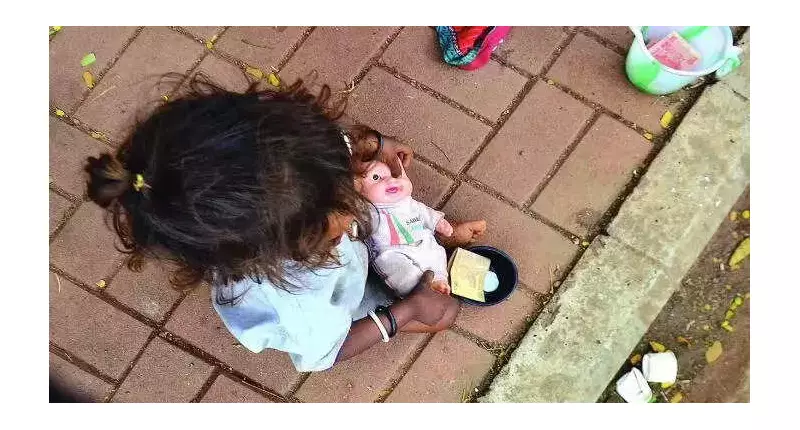
The Madras High Court has taken a stern stance on the alarming issue of children being used for begging across Tamil Nadu. In a significant move, the court has issued notices to the state government, demanding concrete action plans to eradicate this practice and investigate the sinister possibility of children being trafficked or rented out for begging rings.
Court Bench Admits PIL, Seeks Government Response
Admitting a public interest litigation (PIL) on Friday, the first bench comprising Chief Justice Manindra Mohan Shrivastava and Justice G Arul Murugan directed the Tamil Nadu administration to present appropriate measures to tackle this social menace. The bench emphasized the urgency of the situation, suggesting the state must come up with a robust framework to address the exploitation of minors on streets.
The petition was filed by R S Tamilvendan, a resident of Kodambakkam in Chennai. He brought to the court's attention the distressing sight of women, often non-natives of Tamil Nadu, begging at traffic signals and other public places with infants and young children in their arms.

Petitioner's Grave Concerns: Trafficking and Drugging
The petitioner raised several critical issues that demand immediate investigation. He urged the authorities to verify a chilling aspect: whether the women using children for begging are their biological mothers. Tamilvendan expressed deep concern that these children might have been stolen from their families, obtained from child trafficking networks, or even rented for a price to garner more sympathy and alms.
"Those children are exposed to intense heat and rain. Begging is a crime in our country," the petitioner stated. He argued that it is the fundamental duty of the government to at least investigate and rescue these children, placing them in government shelters to secure their future. The petition further highlights a long-term social risk, warning that a child growing up in such an exploitative environment is highly likely to turn anti-social in the future.
In an even more alarming submission, the petitioner sought the court's direction to probe whether these children are sedated with sleeping pills or other drugs to keep them quiet and manageable throughout the day, a practice that poses severe health risks.
The Path Forward: Investigation and Rehabilitation
The Madras High Court's intervention has put the spotlight back on the enforcement of laws against begging and child trafficking. The court's notice compels the Tamil Nadu government to formally respond with a detailed action plan. This plan is expected to outline steps for:
- Immediate identification and rescue of children involved in begging.
- Thorough investigation to establish the true identity of the children and their relationship with the accompanying adults.
- Stringent action against trafficking gangs involved in "renting out" children.
- Proper rehabilitation of rescued children in state-run shelters.
The outcome of this case could set a crucial precedent for other states in India, reinforcing the legal and moral imperative to protect vulnerable children from organized begging syndicates and ensure their right to a safe childhood.