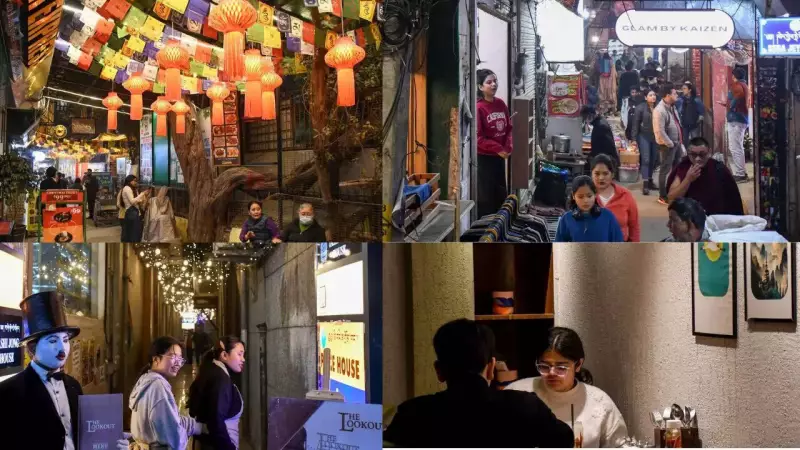
The bustling lanes of Majnu ka Tila, a beloved hub for Tibetan street food and trendy cafés frequented by Delhi University students and young crowds, are facing a regulatory storm. The Delhi High Court has recently directed civic authorities to take strict action against eateries operating without sanctioned building plans and in violation of fire-safety norms.
Court Directive and Café Owners' Response
Earlier this week, the court's order sent ripples through the popular North Delhi neighborhood. The directive specifically targets cafés and restaurants housed in tightly packed, multi-storey buildings that often lack proper safety clearances. However, in a twist, several café owners in the area stated they had not received any official notices regarding the enforcement and remained unaware of how or when the crackdown would begin.
Some proprietors asserted they have already implemented precautionary measures. Prince, a manager of one such restaurant, detailed his establishment's safety provisions. "We have multiple exits and emergency arrangements in place," he said. "There is a road at the back for fire brigade access. We have fire exits on both floors and a water tank on the rooftop for emergencies."

Residents Voice Concerns Over Overcrowding
Local residents, who have witnessed the area's transformation, strongly support the court's intervention. Parvinder Kaur and her husband Narjeet Singh, long-time residents, recalled a time when there was only one restaurant in the locality. They expressed grave concerns about the current state of affairs.
"Now there are many multi-storey buildings without proper exits. If one place catches fire, the entire area will be in danger," the Singhs warned. They highlighted that the risk escalates dramatically during weekends. "On Friday nights, the crowd is very heavy. If something happens, it will be very difficult to get out. Even cars cannot enter these lanes," they added, painting a picture of a potential disaster waiting to happen.
Mixed Reactions from Patrons
The court's direction has elicited mixed feelings from the young visitors who form the backbone of Majnu ka Tila's vibrant café culture. While there is widespread support for ensuring public safety and adhering to fire norms, many also feel a sense of emotional attachment and anxiety about the possible closure of their favorite hangout spots. This dichotomy underscores the challenge of balancing safety regulations with preserving popular cultural and culinary spaces.
The situation remains in flux as the civic authorities are yet to begin visible enforcement on the ground based on the High Court's order. The coming days will determine whether the iconic cafés of Majnu ka Tila can align with safety regulations or face disruptive actions that could change the character of this famous Delhi destination.