Minneapolis Declares Unlawful Assembly After Federal Agents Fatally Shoot US Citizen
City officials in Minneapolis issued an unlawful assembly order on Saturday following a deadly encounter where federal immigration agents shot and killed a 37-year-old man during an enforcement operation. This incident represents the second fatal shooting involving Department of Homeland Security personnel in the city within recent weeks, intensifying public outrage and protests against the substantial federal immigration enforcement presence in Minnesota.
Details of the Fatal Encounter
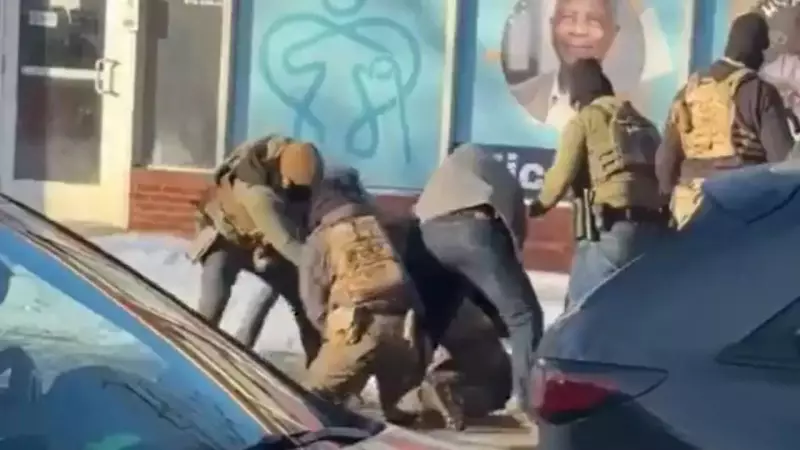
According to city authorities, the deceased individual was identified as a United States citizen and a licensed gun owner. Border Patrol agents approached him during a targeted operation that has deployed thousands of federal officers to the Twin Cities area. The Department of Homeland Security stated that the man was armed with a 9 mm handgun and resisted officers' attempts to disarm him, leading to what they described as defensive shots being fired.
However, local officials and video evidence circulating online have presented conflicting accounts of key details, contributing to heightened public mistrust and widespread outcry. The discrepancies between federal and local narratives have further fueled tensions in the community.
Political Leaders Demand Transparency and Accountability
Minneapolis Mayor Jacob Frey has strongly questioned the continued presence of federal agents in the city, demanding greater transparency regarding their operations. "How many more residents, how many more Americans, need to die or get badly hurt for this operation to end?" he asked during a press conference. Mayor Frey characterized the federal deployment as an invasion of the city's autonomy, echoing sentiments from earlier protests.
State leaders have joined the chorus of criticism, with Minnesota Governor Tim Walz calling for state investigators to take the lead in probing this latest shooting. Governor Walz urged that federal agents should not interfere with local safety efforts, emphasizing the need for independent oversight.
Previous Controversial Incident Involving ICE Agent
The most controversial incident in this surge of federal operations occurred on January 7, when 37-year-old Renee Nicole Good, an American citizen and mother of three, was fatally shot by an Immigration and Customs Enforcement agent in south Minneapolis. Good was sitting in her SUV when an officer fired multiple shots, killing her instantly.
Federal officials framed this killing as an act of self-defense, claiming Good attempted to use her vehicle against the officer. However, local officials, eyewitnesses, and multiple videos circulating online strongly dispute this narrative, showing her attempting to drive away rather than attack the agent.
Her death ignited widespread protests across the United States and in Minneapolis, with thousands of people marching and chanting against the federal deployment while calling for accountability from law enforcement agencies.
Understanding Unlawful Assembly Orders
An unlawful assembly order represents a law enforcement directive declaring that a gathering of people is no longer legal and must disperse immediately. Authorities typically designate an assembly as unlawful when they determine the crowd is:
- Engaging in violence, rioting, or destruction of property
- Creating a serious public safety threat
- Refusing to comply with lawful police instructions
Once an assembly is declared unlawful, police issue an order telling people to leave the area. Those who remain after the order may face arrest for failure to disperse, and law enforcement may employ crowd-control tactics such as tear gas, pepper spray, or batons, depending on local laws and the specific situation.
The unlawful assembly order in Minneapolis highlights the escalating tensions following repeated deadly encounters between federal agents and civilians, raising significant questions about law enforcement protocols and community relations.