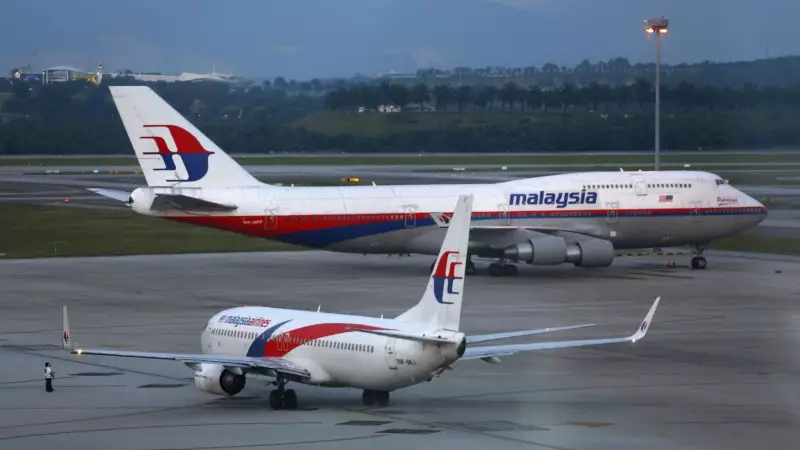
A new chapter has opened in one of aviation's most enduring mysteries. A decade after Malaysia Airlines Flight MH370 vanished from radar screens, a renewed and determined search operation is now underway in the vast expanse of the southern Indian Ocean. This fresh initiative, driven by advanced technology and undeterred resolve, aims to finally locate the wreckage of the Boeing 777 and bring closure to the families of the 239 people on board.
The Launch of a New Deep-Sea Search Mission
The latest search effort is being spearheaded by the American marine robotics company, Ocean Infinity. The company has deployed its state-of-the-art vessel, the Seabed Constructor, which is equipped with a fleet of autonomous underwater vehicles (AUVs). These sophisticated robots are capable of scanning the ocean floor at great depths with high-resolution sonar, covering vast areas more efficiently than previous missions.
This new search zone was determined after a meticulous re-analysis of satellite data, drift modeling of recovered debris, and oceanographic studies. The focus is on a remote area approximately 1,800 kilometres west of Perth, Australia. This region falls outside the primary zone extensively searched by Australian authorities between 2014 and 2017, suggesting investigators are following new leads that point to a different potential crash site.

A Decade of Uncertainty and Heartbreak
The disappearance of MH370 on March 8, 2014, remains a profound tragedy. The flight, en route from Kuala Lumpur to Beijing, lost contact less than an hour after takeoff. Despite one of the most extensive and expensive multinational search operations in history, the main wreckage has never been found. Only a few pieces of confirmed debris, washed ashore on Indian Ocean coastlines years later, have provided tangible, heartbreaking evidence of the plane's fate.
The initial underwater search, led by Australia, covered a vast 120,000-square-kilometre area of the seafloor but concluded in January 2017 without success. A second private search by Ocean Infinity in 2018 also ended without a breakthrough. The emotional toll on the families of the passengers and crew has been immeasurable, with many clinging to hope for answers amid years of agonizing uncertainty.
What Makes This Search Different?
The current mission leverages significant technological advancements not fully available during earlier searches. The AUVs used by Ocean Infinity can operate autonomously for long durations, mapping the seabed with incredible detail. Furthermore, the analysis of ocean currents and debris drift patterns has become more refined over the years.
Authorities have emphasized that this is a "no find, no fee" mission, meaning Ocean Infinity will only receive payment if it successfully locates the aircraft. This arrangement underscores the high-stakes, high-confidence nature of the renewed effort. The Malaysian government has stated its commitment to solving the mystery, with Transport Minister Anthony Loke expressing hope that this new search will yield results.
While the challenges of searching the deep, rugged Indian Ocean floor are immense, the combination of new data, cutting-edge technology, and a persistent drive for answers fuels this latest attempt. The world watches, hoping that this chapter of the MH370 saga will finally provide the resolution that has been desperately sought for ten long years.