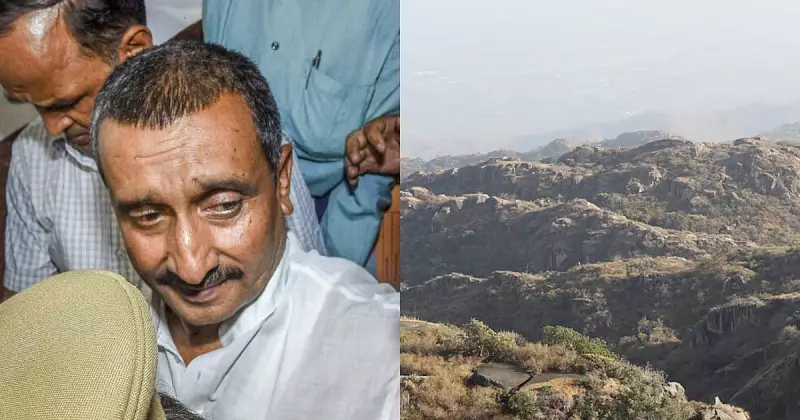
In a significant legal development, former BJP MLA Kuldeep Singh Sengar has been denied bail in the high-profile Unnao rape case. The decision underscores the ongoing judicial scrutiny in this sensitive matter. Separately, the Supreme Court has maintained its crucial directives issued on November 20, which pertain to establishing a uniform definition for the ecologically vital Aravalli range.
Bail Plea Rejected for Former MLA Sengar
The court's refusal to grant bail to Kuldeep Sengar marks a pivotal moment in the long-drawn legal battle. Sengar, a former legislator, was convicted for his role in the rape of a minor girl from Unnao in Uttar Pradesh. The case had sparked national outrage and led to a dramatic chain of events, including a fatal car accident involving the survivor and her family. The denial of bail reinforces the judiciary's firm stance on the gravity of the charges.
Supreme Court's Stand on the Aravalli Range
In a parallel development of environmental importance, the Supreme Court has kept its November 20 directions operational. These directions are focused on formulating a single, consistent definition of the Aravalli range across the states of Haryana, Rajasthan, Gujarat, and Delhi. A uniform definition is critical for the protection and conservation of this fragile mountain ecosystem, which has faced severe threats from mining and urban encroachment. The Court's insistence aims to prevent states from using varying definitions to allow destructive activities in ecologically sensitive zones.

Implications and Next Steps
The bail denial in the Unnao case is seen as a step towards ensuring accountability and justice for the survivor. It signals that influential status does not impede judicial process in serious crimes. On the environmental front, the Supreme Court's persistence with the November 20 deadline for a uniform Aravalli definition is a win for conservationists. It sets the stage for stronger legal safeguards for one of North India's oldest mountain ranges, crucial for groundwater recharge and biodiversity. Both matters are set for further hearings, with their outcomes being closely watched by the public and legal experts alike.
The convergence of these two news items on December 29, 2025, highlights the Indian judiciary's active role in addressing both high-stakes criminal justice issues and pressing environmental concerns.